India Media Hub

Main navigation

  • Banking
  • Business
  • FMCG
  • Home
  • Real Estate
  • Technology
User account menu
  • Log in

Breadcrumb

  1. Home

NASA

By Nimrat , 18 December 2025
j

NASA Astronaut Jonny Kim Returns to Earth After International Space Station Mission

NASA astronaut Jonny Kim has safely returned to Earth following the completion of his mission aboard the International Space Station (ISS), marking another successful chapter in the United States’ human spaceflight program. Kim’s return concludes months of scientific research, operational duties and international collaboration conducted in low-Earth orbit. The mission contributed valuable data across multiple disciplines, including human health, materials science and space technology.

Tags

  • Space Sector
  • World News
By Maulik Majumdar , 30 November 2025
j

NASA’s Perseverance Rover Detects Lightning on Mars, Offering New Insights into Martian Weather

NASA’s Perseverance rover has captured the first evidence of lightning activity on Mars, providing groundbreaking insights into the planet’s atmospheric dynamics. Detected through high-resolution sensors, these electrical discharges suggest that Mars’ thin atmosphere can support localized electrical phenomena, impacting dust storms and potentially influencing chemical reactions on the surface. Scientists highlight that lightning may play a role in producing reactive compounds critical for understanding Mars’ climate history and habitability potential.

Tags

  • Science
By Nitin Mohan Mishra , 25 November 2025
h

NASA Unveils Stunning Images of Interstellar Comet 3I/ATLAS

NASA has released unprecedented images of the interstellar comet 3I/ATLAS, offering scientists and the public a rare glimpse into a celestial visitor from beyond our solar system. The comet, first detected in late 2020, exhibits unique characteristics that distinguish it from typical solar system comets, including an unusual trajectory and composition. High-resolution imagery captured by space-based telescopes provides critical data for understanding its structure, outgassing activity, and interaction with solar radiation.

Tags

  • Science
By Kunal Shrivastav , 25 November 2025
j

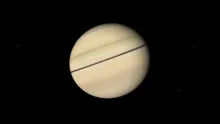
NASA Explains Why Saturn’s Iconic Rings Seem to Disappear

Saturn’s majestic rings, among the most recognizable features in the solar system, are entering a rare phase that makes them appear to vanish from view. NASA scientists explain that this phenomenon is not an actual loss of the rings but an optical illusion caused by the planet’s orbital position relative to Earth. As Saturn approaches its equinox, the rings tilt edge-on, making them nearly invisible through telescopes and space-based observatories.

Tags

  • Science
By Maulik Majumdar , 25 November 2025
j

NASA Unveils Striking New Images of Interstellar Comet 3I/ATLAS

NASA has released a series of high-clarity images capturing interstellar comet 3I/ATLAS, offering scientists and space-enthusiasts a rare glimpse into an object that originated beyond our solar system. The visuals reveal unprecedented structural detail, shedding light on the comet’s volatile composition, trajectory, and fragmentation patterns. As only the third confirmed interstellar visitor detected to date, 3I/ATLAS provides researchers with valuable insights into the chemical diversity and evolutionary history of planetary systems far from our own.

Tags

  • Science
By Shilpa Reddy , 24 November 2025
j

Katalyst Initiative Aims to Preserve Swift Space Telescope Operations Through 2026

NASA’s Swift space telescope, a cornerstone for detecting gamma-ray bursts and high-energy cosmic phenomena, is set to receive operational support through 2026 under the newly announced Katalyst initiative. Designed to extend the telescope’s lifespan and enhance its scientific output, the program focuses on technical upgrades, mission optimization, and data management improvements. Swift has played a pivotal role in high-energy astrophysics since its 2004 launch, contributing to breakthroughs in gamma-ray astronomy and multi-messenger astrophysics.

Tags

  • Science
By Nimrat , 22 November 2025
E

Private Orbital Rescue Mission Set for 2026 Using Air-Launched Rocket System

A privately funded mission aimed at extending the life of a NASA space telescope is set to launch in 2026, marking a turning point in commercial participation in national space infrastructure. Unlike conventional missions lifted from ground-based pads, this operation will use an air-launched rocket deployed from an aircraft at high altitude. The initiative reflects the growing maturity of the private space sector, which is increasingly stepping in to support, repair, and sustain government-built observatories.

Tags

  • Science
  • Space Sector
By Keshav Kulshrestha , 20 November 2025
A

AI and Citizen Science Uncover Possible First Invasive Malaria Mosquito in Madagascar

Researchers using a combination of artificial intelligence and community-driven science may have identified the first-ever presence of Anopheles stephensi—a highly invasive malaria-carrying mosquito—in Madagascar. A photo submitted by a citizen from Antananarivo via NASA’s GLOBE Observer app was analyzed with AI algorithms, which classified the larva with more than 99% confidence. The species’ potential arrival in Madagascar raises alarm due to its adaptability to urban settings and artificial containers.

Tags

  • Healthcare
  • AI
By Amrita Bhatia , 20 November 2025
G

NASA Monitors Expanding Magnetic Field Anomaly as Scientists Study Its Global Implications

NASA is closely observing a rapidly evolving irregularity in Earth’s magnetic field, a region known for its unusually weak magnetic strength. This anomaly, expanding gradually over the South Atlantic and parts of the southern hemisphere, has drawn significant scientific interest due to its potential impact on satellites, spacecraft instrumentation, and atmospheric behavior. As the magnetic field serves as a protective shield against solar radiation, any structural weakness poses operational challenges for space agencies and research institutions worldwide.

Tags

  • Science
By Neena Shukla , 11 November 2025
P

NASA Detects Potentially Habitable Giant Planet—A Celestial Discovery 100 Times Earth’s Mass

In a remarkable advancement in exoplanetary research, NASA scientists have identified a massive planet located beyond our solar system that could potentially support habitable temperatures. Estimated to be roughly 100 times the mass of Earth, the planet exhibits atmospheric conditions that may allow for moderate thermal balance—an essential component for life as we understand it.

Tags

  • Science

Pagination

  • 1
  • Next page
NASA

Footer

  • Artificial Intelligence
  • Automobiles
  • Aviation
  • Bullion
  • Ecommerce
  • Energy
  • Insurance
  • Pharmaceuticals
  • Power
  • Telecom

About

  • About India Media Hub
  • Editorial Policy
  • Privacy Policy
  • Contact India Media Hub
RSS feed