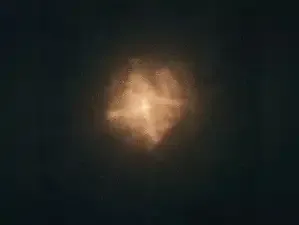
NASA has released a series of high-clarity images capturing interstellar comet 3I/ATLAS, offering scientists and space-enthusiasts a rare glimpse into an object that originated beyond our solar system. The visuals reveal unprecedented structural detail, shedding light on the comet’s volatile composition, trajectory, and fragmentation patterns. As only the third confirmed interstellar visitor detected to date, 3I/ATLAS provides researchers with valuable insights into the chemical diversity and evolutionary history of planetary systems far from our own. NASA’s latest imagery marks a meaningful step forward in understanding how such cosmic wanderers traverse interstellar space and interact with solar radiation.
A Rare Interstellar Visitor
The release of NASA’s new images of comet 3I/ATLAS has renewed scientific interest in the enigmatic class of celestial bodies known as interstellar objects—rare visitors that arrive from beyond the Sun’s gravitational domain. First identified in early 2020, 3I/ATLAS followed the earlier discoveries of 1I/ʻOumuamua and 2I/Borisov, joining a short but scientifically significant list of foreign bodies entering the inner solar system.
Unlike typical comets formed from the primordial materials of our own protoplanetary disk, 3I/ATLAS carries chemical signatures forged in an entirely different stellar environment. This exceptional origin makes the comet particularly valuable to researchers seeking to map the diversity of planetary systems across the galaxy.
New Imagery Reveals Structural Intricacies
NASA’s latest imaging set, captured using advanced optical and infrared instruments, provides a refined view of the comet’s nucleus and dust tail. The high-resolution photographs highlight the comet’s diffuse, fragmenting structure—an indication that it may have disintegrated more rapidly than expected due to solar heating.
Astronomers observed asymmetries in the tail and coma, suggesting uneven outgassing and potential rotational instability. Such behavior provides clues about the comet’s internal composition, including volatile ices and dust grains that respond differently to the Sun’s radiation pressure.
Scientific Significance Beyond the Solar System
The structural differences between 3I/ATLAS and previously observed interstellar visitors underscore the diversity of bodies formed around distant stars. The comet’s disintegration pattern, for instance, differs markedly from that of 2I/Borisov, which remained comparatively intact during its solar passage.
Studying 3I/ATLAS allows scientists to refine models of interstellar object formation, shedding light on how material is ejected from other planetary systems—whether through gravitational perturbations, stellar close-passes, or collisions with larger bodies.
Advancing Research on Interstellar Phenomena
By analyzing the new images, researchers hope to better constrain the comet’s dust distribution, mass-loss rates, and trajectory. These parameters help reconstruct the comet’s original path, contributing to a deeper understanding of how interstellar travelers navigate the complex gravitational web of the Milky Way.
NASA emphasized that each interstellar object offers a unique opportunity. Together, they build a comparative dataset that may ultimately help astronomers characterize the chemical and structural diversity of exoplanetary systems—knowledge that remains at the forefront of modern astrophysics.
A Glimpse Into Galactic History
The images of 3I/ATLAS serve as a reminder that our solar system is not isolated; instead, it resides in a dynamic galactic neighborhood where material freely drifts between star systems. As observational technologies advance, more such visitors are expected to be discovered, expanding the scientific community’s ability to study unaltered building blocks from distant worlds.
NASA’s imagery of 3I/ATLAS adds another chapter to this unfolding narrative—one that deepens humanity’s understanding of the galaxy’s shared history and its continuous flow of cosmic travelers.
Comments