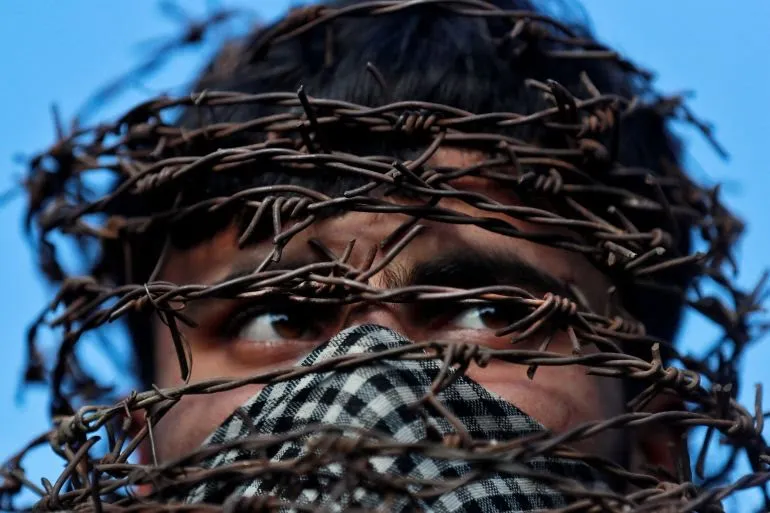
India’s expanding strategic alignment with Israel has sparked debate over whether New Delhi is adopting elements of what some describe as an “Israel model” in its security and governance approach, particularly in Kashmir. The discussion intensified after a senior diplomat publicly referenced the model in 2019, months after the revocation of Jammu and Kashmir’s semi-autonomous status. Since then, critics argue that parallels have emerged in surveillance practices, counterinsurgency strategy and urban demolitions, while the government maintains that its policies are rooted in national security and constitutional integration. The controversy underscores evolving geopolitical partnerships and their domestic implications.
Diplomatic Remarks and Political Fallout
In November 2019, India’s then consul general in New York, Sandeep Chakravorty, was recorded at a private gathering referring to an “Israeli model” in the context of Indian-administered Kashmir. The remarks surfaced during a period of intense political transition in the region.
Just months earlier, the government led by Prime Minister Narendra Modi had revoked Article 370 of the Constitution, removing Jammu and Kashmir’s special status and reorganizing it into federally administered territories. The move was accompanied by a sweeping security lockdown, communication restrictions and the detention of numerous political leaders.
The government described the decision as a constitutional measure aimed at integration and development. Opposition voices, however, characterized it as a unilateral restructuring that curtailed civil liberties.
Strategic Convergence With Israel
India and Israel have significantly deepened bilateral ties over the past decade. Defense cooperation, intelligence sharing and counterterrorism coordination have formed the backbone of the partnership.
Israel has become one of India’s key defense suppliers, providing advanced surveillance systems, unmanned aerial vehicles and missile technology. Beyond hardware procurement, cooperation has expanded into cybersecurity, border management and internal security frameworks.
Analysts note that the convergence reflects shared security concerns, particularly around cross-border militancy and asymmetric threats. Yet the debate centers on whether this alignment extends beyond defense acquisition into broader governance philosophy.
Kashmir After Article 370
Following the abrogation of Article 370 in August 2019, Kashmir witnessed an extended period of restrictions, including curfews and communications blackouts. Authorities argued that these measures were necessary to prevent unrest and ensure stability during the constitutional transition.
The government has since highlighted increased infrastructure spending, investment proposals and local elections as indicators of normalization. Officials maintain that the reorganization aims to integrate the region more fully into India’s economic and administrative framework.
Critics contend that heavy securitization, expanded surveillance and periodic property demolitions echo policies observed in other conflict regions, drawing comparisons to Israeli security practices in the West Bank.
Surveillance, Security and Urban Policy
India has increasingly invested in advanced monitoring technologies, facial recognition systems and integrated command centers across several states. Supporters argue that such measures are consistent with global trends in counterterrorism and urban policing.
Property demolitions linked to alleged security violations have also drawn scrutiny. Authorities frame these actions as lawful enforcement measures against unauthorized construction or individuals accused of criminal activity.
Civil liberties advocates question whether these practices risk blurring the line between legal enforcement and collective punitive approaches. The debate underscores broader tensions between security imperatives and constitutional safeguards.
Government’s Position
The Indian government has consistently rejected assertions that it is modeling domestic policy on any foreign template. Officials argue that security measures are shaped by India’s own legal framework, threat perceptions and federal structure.
They emphasize that bilateral cooperation with Israel remains focused on strategic defense, technology transfer and agricultural innovation. From water management to precision farming, the partnership spans far beyond military procurement.
Supporters of the government maintain that comparisons to an “Israel model” oversimplify complex policy decisions rooted in domestic considerations.
Geopolitical Realignment and Domestic Debate
India’s closer ties with Israel coincide with broader geopolitical recalibration in West Asia, where economic diplomacy and defense cooperation increasingly intersect. As New Delhi diversifies partnerships, it navigates competing diplomatic relationships across the region.
Domestically, the discussion reflects deeper ideological divides about nationalism, security and federalism. For critics, the concern lies in the perceived normalization of extraordinary measures. For proponents, the priority remains territorial integrity and internal stability.
Political analysts observe that such debates are intrinsic to democracies confronting security challenges.
Conclusion: Between Security Doctrine and Democratic Scrutiny
The notion of India embracing an “Israel model” remains a contested political narrative rather than an official doctrine. While strategic cooperation between New Delhi and Tel Aviv has undeniably intensified, the translation of that partnership into domestic governance remains subject to interpretation.
Kashmir continues to symbolize the broader tension between state authority and civil liberty. As India balances national security objectives with democratic accountability, the discourse surrounding foreign influence and policy emulation is likely to persist.
In an era defined by shifting alliances and internal transformation, the intersection of geopolitics and domestic governance will remain a focal point of public debate.
Comments