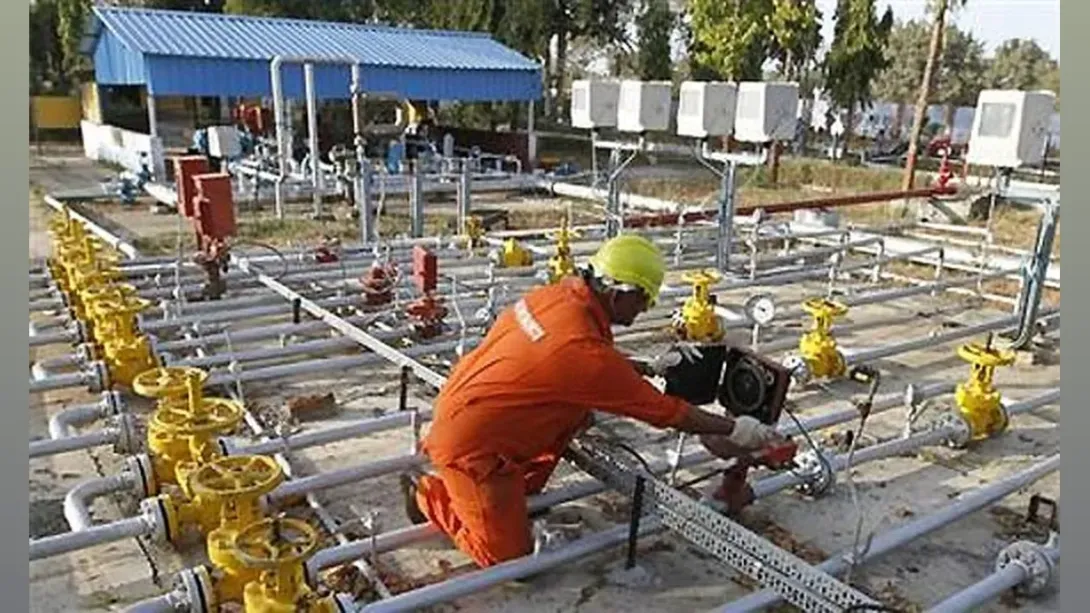
State-run Oil and Natural Gas Corporation (ONGC) and Reliance Industries Ltd. have entered into a strategic agreement to jointly develop and share offshore hydrocarbon resources, marking a rare instance of collaboration between India’s largest public and private energy producers. The pact aims to optimize production from adjacent offshore blocks, reduce operational inefficiencies and accelerate output through coordinated development. By pooling technical expertise and infrastructure, the agreement is expected to unlock stranded reserves and improve recovery rates. The move underscores a pragmatic shift in India’s upstream energy strategy amid declining domestic production and rising import dependence.
A Landmark Collaboration in India’s Upstream Sector
ONGC and Reliance have signed a resource-sharing agreement covering offshore hydrocarbon discoveries located in close proximity. The arrangement allows both companies to coordinate development plans, share data and align production strategies to maximize recovery from contiguous reservoirs.
Such agreements are designed to eliminate duplication of infrastructure and avoid competitive drilling, which can lead to suboptimal reservoir management. Industry observers view the pact as a significant step toward more efficient exploitation of India’s offshore energy assets.
Unlocking Value From Offshore Reserves
Offshore fields are capital-intensive and technologically complex, often requiring advanced drilling techniques and substantial upfront investment. By collaborating, ONGC and Reliance can leverage combined capabilities, including deepwater expertise, subsea infrastructure and operational experience.
The agreement is expected to accelerate development timelines while lowering costs, improving the commercial viability of offshore resources that may otherwise remain underdeveloped. This approach could help arrest the decline in domestic hydrocarbon output.
Strategic Implications for Energy Security
India’s crude oil and natural gas imports account for a large share of domestic consumption, exposing the economy to global price volatility. Enhanced recovery from offshore reserves could partially offset this dependence and strengthen energy security.
The collaboration also aligns with the government’s emphasis on maximizing production from existing fields rather than relying solely on new exploration. Resource sharing enables a more rational and sustainable approach to offshore development.
Setting a Precedent for the Industry
The ONGC-Reliance pact may serve as a template for future collaborations between operators with adjoining acreage. Analysts believe similar agreements could unlock value across multiple basins, particularly where reservoir boundaries are shared.
While execution will be closely watched, the agreement signals a maturing regulatory and commercial environment in India’s upstream sector—one that prioritizes efficiency, cooperation and long-term energy resilience over isolated development strategies.
Comments