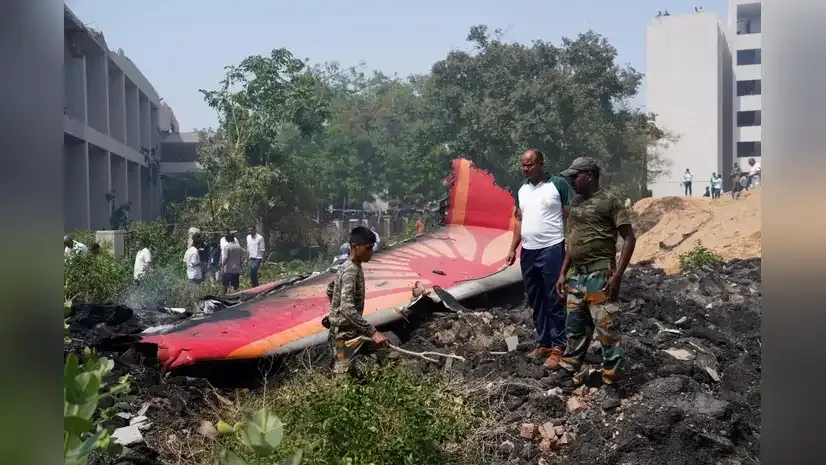
A devastating crash involving Air India Flight AI 171 has left 274 people dead and raised urgent questions about aircraft safety and regulatory oversight in India. The Boeing 787-8 Dreamliner went down shortly after takeoff from Ahmedabad on June 12, striking a residential complex near BJ Medical College. The Aircraft Accident Investigation Bureau (AAIB) is now conducting a comprehensive investigation, including the possibility of sabotage and mechanical failure. Minister of State for Civil Aviation Murlidhar Mohol has assured the public that the black box remains in India and the final report will be released within three months, amid rising scrutiny of aviation safety protocols.
Tragedy Strikes: The Ahmedabad Crash
On the afternoon of June 12, a London-bound Air India Dreamliner crashed within moments of liftoff from Ahmedabad’s Sardar Vallabhbhai Patel International Airport. The aircraft, operating as Flight AI 171, failed to gain adequate altitude and ultimately collided with residential buildings in the Meghaninagar area. Among the 242 passengers and crew onboard, only one person survived. Additionally, 32 individuals on the ground, including nine students and their relatives from BJ Medical College, lost their lives.
Eyewitnesses described the crash as a fiery catastrophe, with thick black smoke engulfing the area and emergency responders scrambling to rescue survivors. The pilot had issued a Mayday distress signal just seconds after departure, confirming a dire in-flight emergency.
Probe Underway: All Angles on the Table
Minister of State for Civil Aviation Murlidhar Mohol confirmed that the AAIB is investigating all possible causes of the crash, including sabotage. Reviewing CCTV footage and conducting forensic analyses of wreckage and maintenance records are part of the inquiry. “It’s a rare incident,” Mohol said. “It’s extremely unusual for both engines to shut down simultaneously.”
Veteran pilots and aviation analysts have speculated that a dual engine failure, potentially tied to fuel supply issues or a systems malfunction, could be at the root. The recovered black box—containing both the cockpit voice recorder (CVR) and flight data recorder (FDR)—is currently in the AAIB’s custody and, contrary to earlier rumors, will not be sent abroad for decoding. Mohol emphasized, “The investigation will be conducted entirely in India.”
Black Box Holds Critical Clues
The CVR and FDR together provide a comprehensive picture of the aircraft’s final moments. The cockpit voice recorder is expected to yield valuable insight into the dialogue between the pilots, while the FDR will detail flight parameters such as altitude, engine performance, and systems status.
Authorities anticipate releasing the official investigation report within three months. The results will likely shape future aviation protocols, potentially influencing engine maintenance standards, emergency response strategies, and pilot training modules across the country.
Safety Oversight and Aircraft Inspection
In the aftermath of the tragedy, public confidence in air travel has understandably wavered. To mitigate concerns, the Directorate General of Civil Aviation (DGCA) conducted an immediate inspection of all 33 Dreamliners in the national fleet. According to Mohol, “Everything was found safe. That is why I said this was a rare accident.”
Nonetheless, the crash has spotlighted longstanding issues within India’s civil aviation apparatus, including technical vacancies at the DGCA and concerns around pilot welfare in private carriers.
Regulatory Challenges and Workforce Shortages
During his remarks at the Emerging Business Conclave in Pune, the minister acknowledged the existence of 419 unfilled technical positions at the DGCA, an issue that undermines regulatory oversight. “The DGCA will soon begin working on the issue of technical vacancies,” he stated.
On the matter of private airlines allegedly overworking pilots, Mohol urged aggrieved aviators to escalate complaints directly to the Ministry of Civil Aviation. “No private airline can appoint individuals without DGCA’s approval,” he affirmed, reinforcing the importance of credential verification in operational safety.
Making Air Travel More Affordable
The minister also addressed public concerns regarding the affordability of air travel and related services at airports. In an effort to provide budget-friendly options, the government has introduced “Udaan Yatri Cafes” at four to five airports. These kiosks offer items like tea and samosas for Rs. 20 and bottled water for Rs. 10. The initiative aims to democratize access to airport facilities and will gradually expand to more locations nationwide.
Conclusion: A Catalyst for Reform
The Ahmedabad crash serves as a grim reminder of the stakes involved in aviation safety. While the investigation continues, the tragedy has already reignited calls for structural reforms in India’s civil aviation ecosystem—from stronger oversight mechanisms and better technical staffing to more transparent maintenance protocols. The eventual findings from the AAIB’s inquiry could pave the way for critical regulatory improvements and help restore public confidence in India’s rapidly growing aviation sector.
Comments