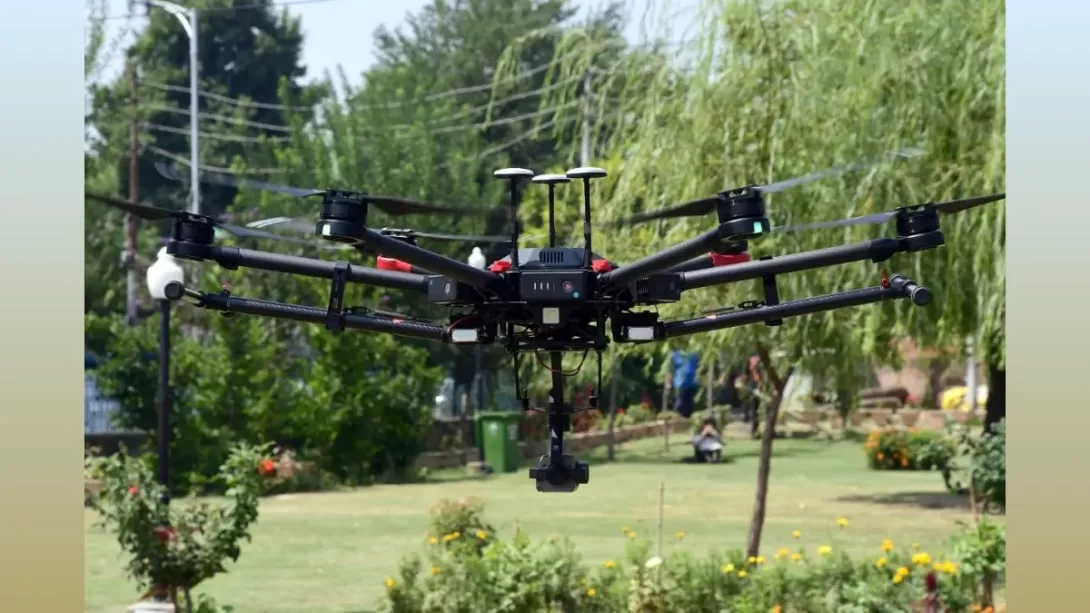
In a bid to modernize agriculture and enhance farmers' income, the Uttar Pradesh government has rolled out a drone-powered crop protection initiative across six districts as part of a pilot program. Under the scheme, drones are being deployed to spray nano urea and pesticides, enabling timely, precise, and efficient crop care. The initiative—launched under the Atmanirbhar Krishak Samanvit Vikas Yojana and supported by the Agriculture Infrastructure Fund—marks a significant technological shift in Indian farming. By training farmers in drone operations, the state aims to ensure widespread adoption and long-term productivity gains across Uttar Pradesh’s agrarian landscape.
Modernizing Agriculture Through Drone Technology
Uttar Pradesh, one of India’s most agriculturally significant states, has initiated a strategic pivot toward tech-enabled farming by introducing drone-based crop protection in six key districts. As part of a state-supported pilot project, drones have begun spraying nano urea and pesticides across farms in Lucknow, Gorakhpur, Bahraich, Muzaffarnagar, Ghaziabad, and Kanpur Nagar.
This forward-looking initiative is intended to mechanize and optimize agricultural practices, enabling farmers to achieve higher efficiency and yields with reduced physical labor and resource input. According to the state government, the project is aligned with the dual goals of doubling farm income and integrating advanced technology into rural economies.
Scale, Scope, and Speed of Implementation
Under the Atmanirbhar Krishak Samanvit Vikas Yojana and the Agriculture Infrastructure Fund (AIF), the state has already launched nine drone programs across the six participating districts—two each in Gorakhpur, Bahraich, and Muzaffarnagar, and one in each of the other three.
Each drone can spray agricultural inputs over an area ranging from 3 to 12 acres per hour, drastically reducing the time and effort required for manual spraying. This not only ensures timely pest control and nutrient application but also significantly minimizes input wastage and human exposure to chemicals.
With precision-enabled deployment, the drones enhance crop health monitoring and improve the accuracy of interventions—crucial in preventing yield losses and optimizing input costs.
Building Farmer Capacity for a Digital Agricultural Future
A cornerstone of the initiative is the hands-on training provided to local farmers. By equipping them with the skills to operate drones and use data-driven decision-making tools, the government aims to democratize access to modern agricultural technology.
These training modules also promote awareness of nano urea, a highly efficient and eco-friendly fertilizer that is part of India’s push toward sustainable agriculture. The introduction of such smart inputs, coupled with advanced delivery systems like drones, marks a substantial departure from traditional, labor-intensive practices.
Vision for Expansion and Long-Term Impact
The pilot project is designed to be a scalable model, with plans to extend drone usage to additional districts in the coming months. This rollout will be supported by ongoing investments in digital infrastructure, extension services, and policy incentives.
If implemented effectively at scale, drone-assisted crop management has the potential to drastically reduce costs, enhance productivity, and mitigate risks associated with climate variability and labor shortages. It also aligns with national objectives such as the Digital India initiative and the broader vision of self-reliant agriculture.
Conclusion:
By pioneering drone-based agricultural practices, Uttar Pradesh is not merely embracing innovation—it is laying the foundation for a structural transformation of Indian farming. With policy support, farmer training, and a focus on scalable technology, this initiative could serve as a national benchmark in the coming decade. In the evolving landscape of agri-tech, such efforts are no longer optional—they are essential.
Comments