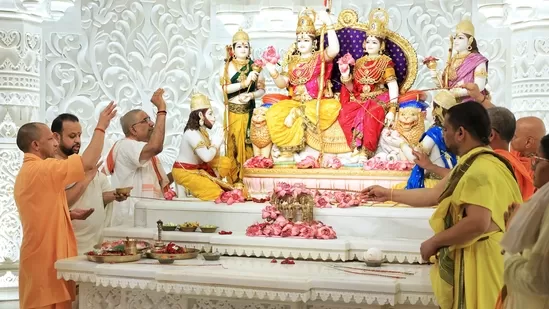
Uttar Pradesh Chief Minister Yogi Adityanath recently participated in the solemn ‘Pran Pratishtha’ ceremony at the Shri Ram Janmabhoomi Temple in Ayodhya, marking a historic milestone in India’s cultural and religious heritage. The event, conducted under the aegis of Prime Minister Narendra Modi’s leadership, symbolizes the culmination of a 500-year wait with the consecration of sacred idols following traditional Vedic rites. CM Yogi emphasized this occasion as a restoration of India’s pride and spiritual identity, congratulating the people of Ayodhya, the state, and adherents of Sanatan Dharma worldwide. The ceremony highlights the government’s commitment to preserving and promoting the nation’s cultural ethos.
Historical Significance of the Pran Pratishtha Ceremony
The ‘Pran Pratishtha’ ritual at Shri Ram Janmabhoomi holds profound historical and spiritual significance. On January 22, 2024, under the stewardship of Prime Minister Narendra Modi, the long-anticipated ceremony reinstated the sanctity of Lord Ram’s presence at his birthplace in Ayodhya. The ritual embodies the fulfillment of a centuries-old aspiration, affirming India’s rich religious traditions and reaffirming the nation’s cultural foundations.
Chief Minister Yogi Adityanath articulated that this ceremony represents the reestablishment of India’s pride through the spiritual revival of Ayodhya, a site of immense symbolic and religious importance. The event marks not only a religious milestone but also a unifying cultural moment for millions across the nation and diaspora.
The Ceremony: Vedic Rituals and Symbolism
Held on the first floor of the Shri Ram Janmabhoomi Temple, the ‘Pran Pratishtha’ ceremony involved the consecration of sacred idols as prescribed by ancient Vedic rituals. The idols included Lord Ram seated majestically on the throne alongside Maa Janaki, flanked by his brothers Bharat, Laxman, and Shatrughan, with the idol of Lord Bajrangbali also venerated.
These rituals are deeply embedded in Hindu religious practice, signifying the invocation of divine presence into the idols, thereby transforming them into living embodiments of spirituality. The meticulous adherence to tradition underscores the temple’s sanctity and the cultural continuity of Sanatan Dharma.
Political and Cultural Implications
Chief Minister Yogi Adityanath’s presence at the ceremony highlights the political and cultural convergence surrounding the Shri Ram Janmabhoomi project. He extended his congratulations to the people of Ayodhya, the broader Uttar Pradesh populace, and followers of Sanatan Dharma globally, reinforcing the government’s role in fostering religious heritage.
The event also serves as a testament to the Indian government’s strategic emphasis on cultural nationalism, wherein heritage sites are leveraged to bolster national identity and social cohesion. The Prime Minister’s leadership in actualizing this vision is widely acknowledged as a defining factor in the successful completion of the project.
Conclusion: A Milestone in India’s Cultural Renaissance
The ‘Pran Pratishtha’ at Shri Ram Janmabhoomi represents more than a religious ceremony; it is a milestone in India’s cultural renaissance. By reviving an ancient spiritual legacy, the government and religious custodians have reinforced the country’s identity rooted in Sanatan Dharma’s enduring values.
As Uttar Pradesh and India at large celebrate this historic occasion, it underscores the intersection of faith, politics, and national pride in shaping India’s contemporary narrative. The ceremony not only honors tradition but also projects a vision of cultural confidence and unity poised to influence generations ahead.
Comments