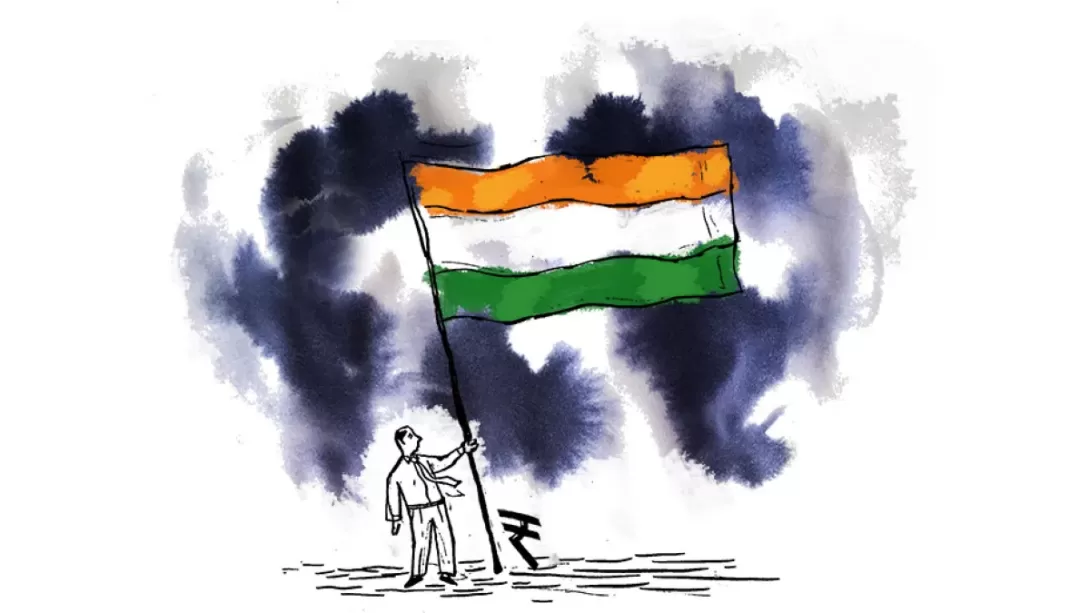
In a pointed critique of India’s current economic trajectory, Samajwadi Party leader Akhilesh Yadav has alleged that the country’s growing income disparity and uneven development stem from a steady decline in domestic manufacturing. In a social media statement, Yadav contended that major industrial conglomerates are increasingly pivoting away from production toward trading, eroding the value of indigenous resources and skills. He accused the government of promoting self-reliance rhetorically while forging partnerships with multinational corporations in practice—policies he claims are deepening dependence on imported goods and amplifying inequality.
Decline in Domestic Manufacturing: A Root Cause of Imbalance
Akhilesh Yadav, the former chief minister of Uttar Pradesh and president of the Samajwadi Party, has raised concerns over what he perceives as the gradual dismantling of India's manufacturing base. He argues that the shift of large industrial houses from production to trading is not merely a strategic shift but a national economic setback. According to Yadav, this transition has led to a devaluation of native raw materials, traditional craftsmanship, and skilled labor—elements essential for employment generation and sustainable development.
Yadav claims this erosion has created a ripple effect, intensifying structural unemployment and contributing to the uneven distribution of wealth across regions and social strata.
Allegations of Contradictory Economic Policies
Central to Yadav’s argument is what he views as a dissonance between the government’s stated economic vision and its actual policy direction. Referencing a recent speech by Prime Minister Narendra Modi in Gandhinagar—which called for leveraging tier-2 and tier-3 cities to elevate India’s global economic standing—Yadav pointed out the contradiction between the rhetoric of "Atmanirbharta" (self-reliance) and the increasing reliance on foreign multinationals.
He alleged that while the government vocally promotes locally-made products, its backchannel agreements with international corporations essentially position India as a marketplace for foreign goods, not a hub of indigenous innovation or production.
Rising Dependence on Imports: A Threat to Economic Sovereignty
Yadav’s critique extends to what he describes as a deliberate policy pivot that favors imported finished goods over local production. This growing dependency, he asserts, weakens India’s economic sovereignty and stifles homegrown enterprise. He warned that such an approach undermines the foundation of self-reliance and reinforces the dominance of foreign players in key economic sectors.
“The government is not empowering Indian industry; it is becoming a sales agent for global corporations,” he said, underscoring the adverse implications for employment and the national economy.
Income Inequality and the Mirage of Prosperity
In his sharpest remarks, Yadav linked the current policy framework to a worsening income gap, where wealth accumulation is increasingly skewed in favor of the elite. “The rich are getting richer, while the poor are left further behind,” he stated, arguing that prosperity should be gauged not by lofty GDP targets but by metrics such as per capita income and equitable wealth distribution.
He likened the government's posture to that of a “showpiece elephant”—impressive in appearance but lacking substance—accusing it of misrepresenting its true intentions and failing to prioritize inclusive development.
Conclusion
Akhilesh Yadav’s comments reflect a growing discourse among opposition leaders who question the sustainability and equity of India’s current economic policies. As debates intensify over the nation’s path to becoming a global economic powerhouse, his call for a revival of domestic manufacturing and genuine self-reliance highlights critical tensions at the heart of India's development narrative. Whether these concerns will prompt a policy recalibration remains to be seen, but the conversation around balancing growth with equity is undoubtedly gaining urgency.
Comments