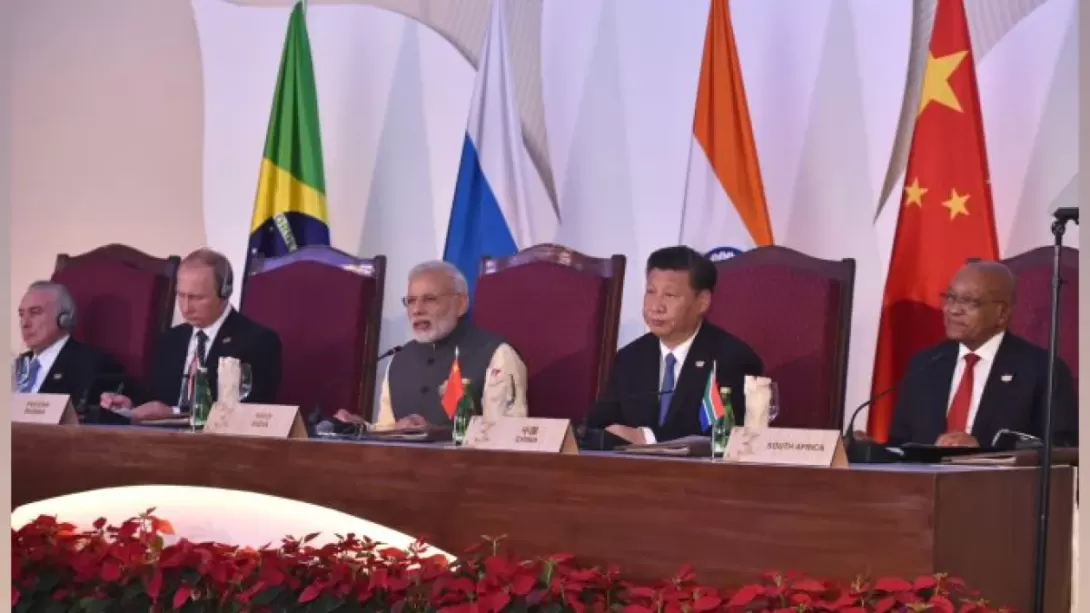
Union Minister Gajendra Singh Shekhawat will lead India’s delegation at the upcoming BRICS Culture Ministers' Meeting in Brasília on May 26, where he is expected to underscore the country’s unwavering dedication to cultural diplomacy, heritage preservation, and global cultural cooperation. The summit, hosted under Brazil’s current BRICS presidency, will bring together cultural representatives from Brazil, Russia, India, China, and South Africa to advance multilateral collaboration in the arts, heritage, and creative sectors. India plans to highlight recent initiatives, propose collaborative cultural projects, and advocate for deeper institutional ties that promote diversity and mutual understanding among member nations.
India’s Diplomatic Strategy: Culture at the Forefront
India’s participation in the BRICS Culture Ministers’ Meeting reflects a broader diplomatic strategy that places cultural diplomacy at the heart of international engagement. Union Minister of Culture and Tourism Gajendra Singh Shekhawat is slated to represent India at the high-level forum, where he will present the nation’s vision for inclusive, collaborative, and sustainable cultural development.
Officials say the Indian delegation will champion ideas that promote not only the safeguarding of heritage but also the democratization of cultural expression, encouraging people-to-people contact as a conduit for soft power and mutual understanding.
Agenda Highlights: Collaboration Through Culture
The theme of this year’s BRICS cultural summit—focused on institutional cooperation, joint initiatives, and diversity preservation—offers India a strategic platform to promote bilateral and multilateral programs in areas such as performing arts, literature, visual arts, and heritage conservation.
The Ministry of Culture emphasized that India will advocate for more robust partnerships across member countries, particularly in establishing frameworks that facilitate the exchange of ideas, curatorial practices, and academic dialogue. India’s priorities will include expanding creative industries, preserving indigenous art forms, and empowering grassroots cultural institutions.
India’s Cultural Footprint: Recent Initiatives and Contributions
During the meeting, Shekhawat is expected to spotlight India’s evolving cultural landscape and recent government-led initiatives aimed at expanding the country’s global cultural influence. These efforts include digitization of historical archives, revitalization of rural arts, promotion of regional literature, and festivals celebrating India’s diverse heritage.
The Indian delegation is also likely to emphasize the importance of cultural entrepreneurship, particularly how India’s creative economy is being harnessed as a tool for both social cohesion and economic growth.
Beyond the Summit: Bilateral Cultural Diplomacy
On the sidelines of the ministerial dialogue, the Indian delegation is expected to hold bilateral talks with counterparts from other BRICS nations. These meetings will explore joint cultural festivals, artist residencies, academic collaborations, and reciprocal exchange programs designed to foster long-term relationships among institutions and practitioners.
India’s cultural diplomacy framework, rooted in the principle of Vasudhaiva Kutumbakam—the world is one family—will serve as a guiding philosophy in these engagements, officials noted.
Cultural Multilateralism: A Path to Global Harmony
India’s engagement at the BRICS forum underscores its broader commitment to global cultural governance. As nations grapple with the challenges of nationalism, conflict, and climate change, India is positioning culture as a unifying force capable of bridging divides and nurturing empathy.
“India remains committed to working closely with BRICS partners to build resilient cultural frameworks, encourage intercultural dialogue, and contribute to a more inclusive and harmonious global order,” a statement from the Ministry of Culture affirmed.
Conclusion
By participating actively in the BRICS Culture Ministers’ Meeting, India is not merely fulfilling a diplomatic obligation—it is reaffirming its role as a cultural powerhouse with a global vision. As the world grows increasingly interdependent, India’s emphasis on cultural cooperation signals a progressive approach to diplomacy—one that recognizes the arts not just as a reflection of identity, but as a powerful engine for peace, inclusion, and innovation.
Comments