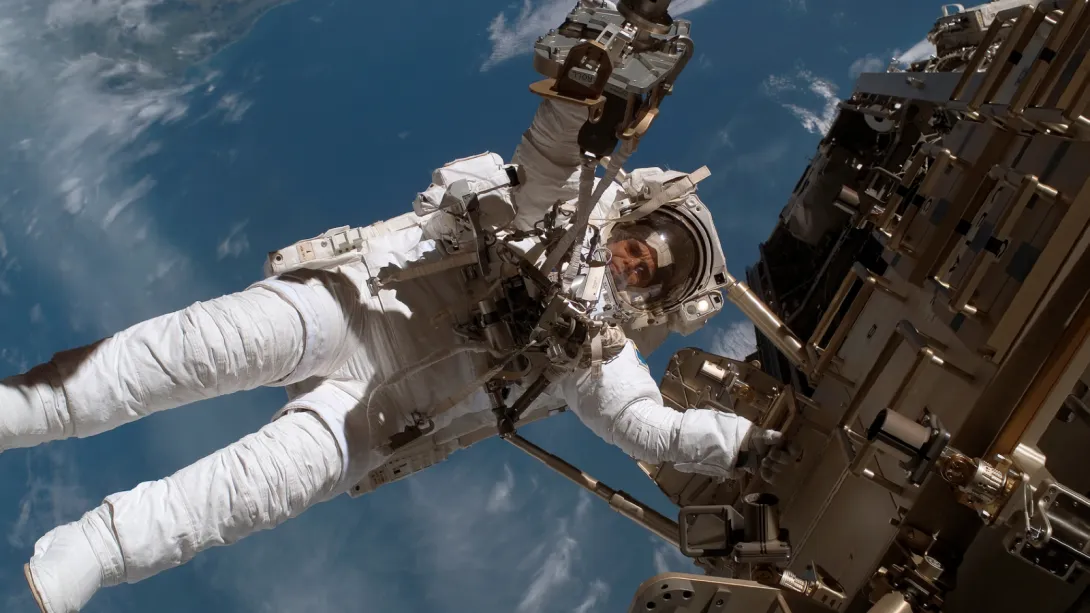
A recent spacewalk by astronauts aboard an orbital station underscores the continuing importance of human activity in space exploration. The mission involved critical maintenance tasks, technology upgrades, and scientific equipment installation outside the spacecraft. Spacewalks remain among the most complex and risky operations astronauts perform, requiring extensive training, advanced equipment, and precise coordination with mission control on Earth. Officials say such operations are essential for maintaining long-term missions in orbit and preparing for future deep-space exploration initiatives. As international space agencies expand their ambitions, spacewalks continue to serve as a crucial tool for sustaining orbital infrastructure and advancing scientific discovery.
The Strategic Importance of Modern Spacewalks
A spacewalk, formally known as an extravehicular activity (EVA), represents one of the most demanding tasks undertaken by an Astronaut. During these operations, astronauts exit the protective environment of a spacecraft to perform work in the vacuum of space.
The latest mission involved crew members stepping outside the International Space Station to conduct equipment upgrades and maintenance procedures. Such operations are essential for ensuring that orbital platforms remain functional for scientific experiments and long-duration missions.
Engineers on the ground monitor every movement carefully, coordinating tasks with astronauts to ensure both safety and operational efficiency.
Complex Preparation and Precision Execution
Preparing for a spacewalk involves months of planning and rigorous training. Astronauts rehearse mission tasks in massive underwater facilities that simulate the weightless environment of space.
Before leaving the spacecraft, astronauts must suit up in advanced life-support systems capable of regulating oxygen, temperature, and communication. These suits function as miniature spacecraft, designed to protect astronauts from extreme temperatures, radiation exposure, and micrometeoroids.
Once outside, astronauts rely on safety tethers and robotic arms to move across the structure of the space station while performing delicate tasks that require both strength and precision.
Technology Maintenance and Scientific Upgrades
The primary objectives of most spacewalks include installing new hardware, repairing damaged components, and deploying scientific instruments.
During the recent operation, astronauts worked on enhancing power systems and upgrading communication equipment, improvements that help extend the operational life of orbital facilities. Such upgrades are critical as space stations host numerous international research projects in fields ranging from materials science to human physiology.
Maintenance performed during these missions ensures that scientific experiments continue uninterrupted, benefiting researchers across the globe.
Risks and Challenges of Working in Space
Despite advanced technology, spacewalks remain inherently risky. Astronauts operate in a hostile environment where even minor errors can have serious consequences.
Temperatures in space can swing dramatically between intense heat and extreme cold. Additionally, astronauts must manage limited oxygen supplies and avoid collisions with small pieces of orbital debris traveling at high speeds.
Because of these risks, mission planners design procedures with multiple layers of safety and contingency protocols.
Expanding Human Presence in Space
Spacewalks are becoming increasingly important as international space agencies prepare for future missions beyond low Earth orbit.
Organizations such as NASA and European Space Agency are developing programs aimed at establishing long-term lunar infrastructure and eventually sending astronauts to Mars.
These ambitious goals will require astronauts to perform complex construction and repair tasks in space environments far from Earth, making spacewalk expertise a vital capability.
The Future of Extravehicular Exploration
As humanity’s ambitions in space continue to grow, spacewalks will remain central to maintaining orbital systems and enabling exploration missions.
Advances in robotics, autonomous systems, and next-generation space suits are expected to improve astronaut safety and operational efficiency. At the same time, scientists believe that human adaptability and decision-making remain irreplaceable for many tasks conducted outside spacecraft.
For now, every successful spacewalk reinforces the enduring role of astronauts in expanding humanity’s presence beyond Earth’s atmosphere and shaping the future of space exploration. 🚀
Comments