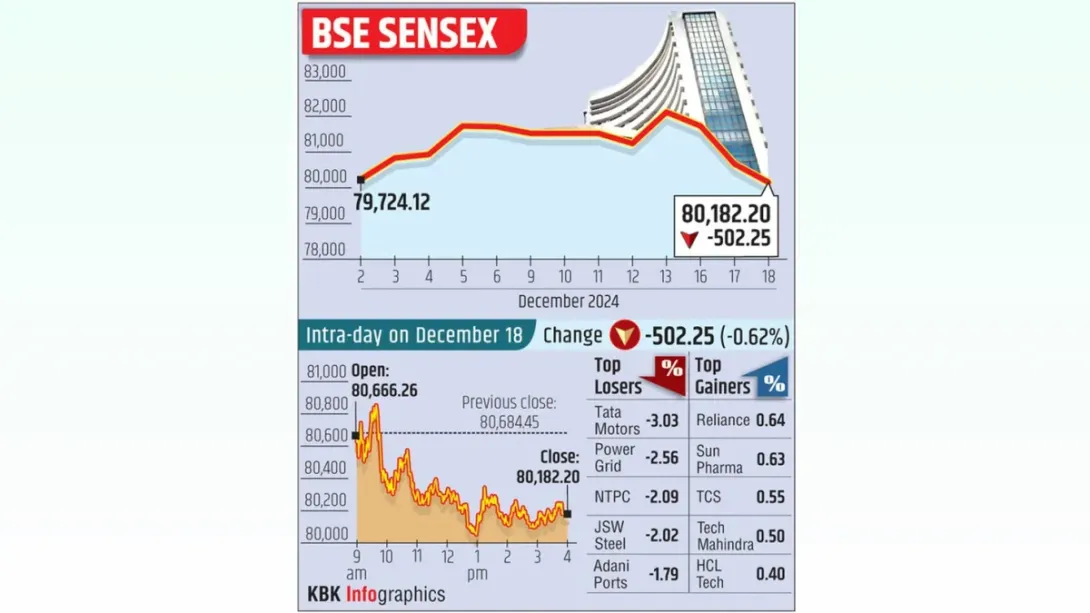
Indian equity markets experienced a notable decline as escalating geopolitical tensions in West Asia unsettled global investors and heightened risk aversion. Benchmark indices slipped amid widespread selling across sectors, with investors moving toward safer assets in response to uncertainty surrounding the region’s stability. Energy price volatility and concerns about potential disruptions to global trade routes further dampened market sentiment. Market analysts noted that geopolitical shocks often trigger short-term corrections in equities, particularly in emerging markets. While the sell-off reflects immediate caution among investors, experts believe long-term fundamentals of the Indian economy remain intact despite the temporary turbulence.
Geopolitical Developments Shake Market Confidence
India’s stock markets retreated as investors reacted cautiously to rising geopolitical tensions in West Asia, a region critical to global energy supply chains and trade flows. The uncertainty has sparked risk-off sentiment across global financial markets, prompting investors to reassess exposure to equities.
Market participants are closely watching developments in the region, as any escalation could have implications for oil prices, shipping routes, and broader economic stability. Such concerns often translate into volatility in financial markets, particularly in emerging economies that are sensitive to global capital flows.
The decline in equities reflected a broader global trend, with investors shifting funds toward traditionally safer investment options such as gold and government bonds.
Broad-Based Selling Across Key Sectors
The market downturn was not limited to a single sector. Banking, information technology, and capital goods stocks witnessed noticeable selling pressure, contributing to the overall weakness in benchmark indices.
Financial stocks, which typically serve as a barometer of economic sentiment, were among the most affected. Investors remain cautious about the potential ripple effects of geopolitical instability on currency markets, capital flows, and interest rate expectations.
Technology shares also faced headwinds as global uncertainty weighed on export-oriented sectors that rely heavily on international demand.
Oil Price Volatility Adds to Market Pressure
One of the most significant concerns for investors is the possibility of volatility in crude oil prices. West Asia plays a pivotal role in global energy production, and disruptions in the region often lead to sudden price spikes.
For India, which imports a large share of its crude oil requirements, rising energy costs could have macroeconomic consequences. Higher oil prices tend to widen the current account deficit, increase inflationary pressures, and strain fiscal balances.
These factors often translate into cautious investor behavior in equity markets, as higher input costs can affect corporate profitability across industries.
Investor Strategy Shifts Toward Defensive Assets
Amid heightened uncertainty, institutional investors have been gradually reallocating capital toward defensive assets. Safe-haven investments such as gold and sovereign bonds typically see increased demand during periods of geopolitical stress.
Foreign portfolio investors, who play a significant role in Indian equity markets, often respond quickly to global developments. Even a modest shift in international capital flows can influence short-term market performance.
Domestic institutional investors have attempted to cushion the impact by maintaining steady investment flows, helping limit the extent of the decline.
Long-Term Economic Fundamentals Remain Stable
Despite the market’s immediate reaction, economists emphasize that India’s underlying economic fundamentals remain strong. The country continues to benefit from robust domestic consumption, improving infrastructure investment, and a growing digital economy.
Market corrections triggered by geopolitical events are often temporary, particularly when they are driven by sentiment rather than structural economic weaknesses. Analysts note that long-term investors frequently use such phases to reassess portfolio allocations and identify undervalued opportunities.
Outlook: Markets to Remain Sensitive to Global Developments
Looking ahead, market performance will likely remain sensitive to developments in West Asia and their impact on global energy markets. Any escalation in the region could intensify volatility, while signs of diplomatic resolution may quickly restore investor confidence.
For now, traders and institutional investors alike are closely monitoring geopolitical signals alongside economic indicators. While the near-term outlook may remain uncertain, the broader trajectory of India’s economy continues to provide a foundation for long-term market resilience.
Comments