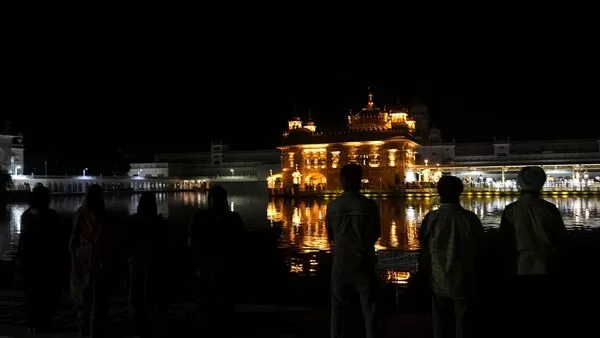
In a rare and symbolic moment, Sri Harmandir Sahib—popularly known as the Golden Temple—plunged into darkness as part of a nationwide blackout drill conducted under the directive of the Ministry of Home Affairs. This exercise, held amid escalating tensions along the India-Pakistan border, is part of a wider security preparedness strategy in response to recent aerial threats. As parts of Punjab, Jammu & Kashmir, and surrounding regions brace for potential conflict, the blackout serves not only as a tactical measure but also as a stark reminder of the volatility in South Asia’s geopolitical landscape.
Symbolism and Strategy: Blackout at the Golden Temple
The lights dimming at the revered Golden Temple in Amritsar were not due to power failure, but a deliberate, calculated move by Indian authorities. The Ministry of Home Affairs (MHA) ordered a full-scale blackout drill across several border states, and Sri Harmandir Sahib, one of India’s most iconic religious sites, became a symbolic participant in this national preparedness operation.
This temporary power-down was executed with the intent to test India’s civilian response readiness against potential aerial threats, including drone and missile attacks. The decision to include such a high-profile and spiritually significant site underscores the gravity of the situation and the all-encompassing scope of current national security measures.
National Security on High Alert
Tensions between India and Pakistan have intensified over the past several days, with multiple reports of drone incursions, attempted missile strikes, and retaliatory military operations. The blackout drills are part of a layered security response initiated across the northern states, particularly in Punjab, Jammu & Kashmir, Haryana, and the Union Territory of Chandigarh.
Authorities have urged citizens to stay indoors during evening hours, enforce voluntary blackouts, and comply with all security protocols. Sirens have echoed across several towns in recent nights, and schools in high-risk areas have been closed as a precautionary measure.
From a defense perspective, the drills serve to mitigate risks of visual targeting by hostile drones and to strengthen civilian discipline in emergency scenarios. The blackout in Amritsar—visible even at the hallowed premises of the Golden Temple—was one of many across a network of strategically sensitive locations.
Broader Implications for Civil and Military Coordination
This moment of enforced darkness in a place usually radiant with light, music, and spiritual devotion, offers more than just an exercise in tactical discretion. It reflects a growing need for civil-military coordination in an age where warfare may begin without formal declarations and could arrive silently through the skies.
While the Golden Temple itself is not a military target, its involvement in this nationwide exercise helps build public consciousness around the evolving nature of security threats. More critically, it exemplifies how defense operations are no longer confined to battlefields but now extend into the heart of civilian life and cultural heritage.
Economic and Market Response: Assessing the Fallout
Although the Indian stock market has shown remarkable resilience amid heightened tensions, defense sector stocks have seen a marginal uptick as investors anticipate increased government expenditure on surveillance, drone neutralization systems, and air defense technology. Firms specializing in cybersecurity, aerospace engineering, and unmanned aerial vehicle (UAV) countermeasures are expected to benefit if the geopolitical strain continues.
On the flip side, sectors sensitive to border instability—such as aviation, logistics, and tourism—may face temporary disruptions. The symbolic blackout at a key tourist and religious landmark such as the Golden Temple could heighten caution among domestic and international travelers alike.
Conclusion: A Nation on Edge, United in Vigilance
The momentary blackout at Sri Harmandir Sahib is far more than a power cut—it is a metaphor for the darkness that looms over a region wrestling with volatility. Yet, it also reflects India’s commitment to readiness, unity, and resilience in the face of emerging threats. As the country braces for further developments, every flick of a switch—or extinguishing of a light—serves as a quiet yet potent act of defense.
Comments