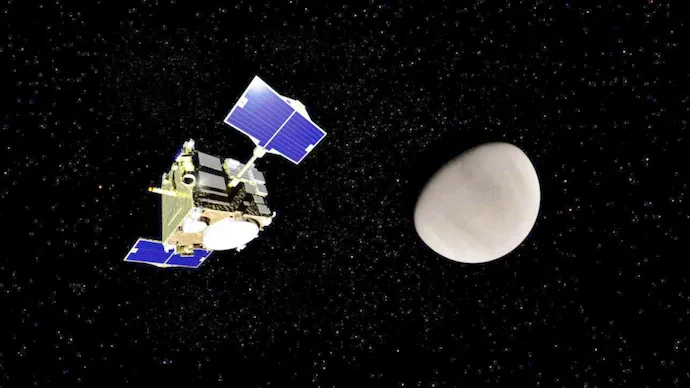
NASA officially concluded its Venus Climate Orbiter mission after years of dedicated observation, marking a significant milestone in planetary science. The mission, which studied Venus’ dense atmosphere, cloud dynamics, and climate systems, provided critical data on atmospheric composition, surface temperatures, and wind patterns. Insights from the orbiter are reshaping our understanding of greenhouse effects, planetary evolution, and comparative climatology with Earth. By leveraging advanced spectrometry, radar mapping, and atmospheric probes, scientists have generated a wealth of information that will inform future missions and deepen knowledge about one of the solar system’s most enigmatic planets.
Mission Overview
Launched to investigate Venus’ extreme climate, the orbiter was equipped with state-of-the-art instruments designed to probe atmospheric layers, analyze chemical composition, and capture high-resolution imaging of cloud structures. The mission aimed to understand the processes driving Venus’ intense greenhouse effect, its super-rotating winds, and volcanic activity.
Scientific Discoveries
Throughout the mission, researchers collected unprecedented data on sulfuric acid clouds, carbon dioxide concentration, and thermal anomalies on Venus’ surface. These findings are instrumental in modeling planetary climates and provide a benchmark for understanding how greenhouse gases influence surface temperatures. The orbiter also detected atmospheric waves and turbulence, offering clues to the mechanisms behind Venus’ dynamic weather systems.
Implications for Earth and Beyond
Data from the Venus Climate Orbiter holds broader implications for comparative planetology, particularly in studying extreme climate scenarios and atmospheric evolution. Insights gained may inform Earth-based climate models, helping scientists predict the long-term effects of greenhouse gases. Additionally, the mission sets the stage for future Venus exploration, guiding spacecraft design and scientific priorities for follow-up missions.
Future Prospects
NASA plans to build on the orbiter’s findings with upcoming missions aimed at more detailed surface exploration and atmospheric sampling. The conclusion of this mission underscores the importance of sustained observation and advanced instrumentation in unraveling the mysteries of our planetary neighbors.
Conclusion:
The successful completion of the Venus Climate Orbiter mission represents a landmark achievement in planetary science. Its findings not only illuminate Venus’ hostile climate but also provide valuable analogs for understanding atmospheric processes on Earth and other exoplanets, marking a new era in comparative climatology.
Comments