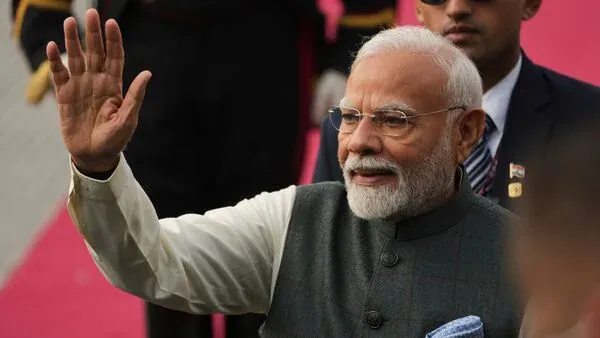
Prime Minister Narendra Modi was warmly received in Rio de Janeiro by Brazilian President Luiz Inácio Lula da Silva as he arrived to participate in the 17th BRICS Leaders Summit. As the world navigates mounting geopolitical tensions, technological disruption, and climate urgency, India’s active presence at this pivotal gathering reflects its deepening role in shaping the Global South’s voice. The Summit is centered around inclusive and sustainable governance, with discussions ranging from global governance reform to artificial intelligence, health, climate, and financial stability. Modi's bilateral engagements and forthcoming state visit to Brasilia also mark a significant diplomatic milestone.
India’s Strategic Engagement with BRICS
India’s participation in the 17th BRICS Leaders Summit reaffirms its strategic commitment to the coalition of emerging economies. As a founding member, India views the grouping as a vital platform to promote a more equitable and multipolar world order. Prime Minister Modi’s presence in Brazil, marking his fourth official visit to the country, underscores the importance New Delhi attaches to the BRICS framework as a vehicle for geopolitical and economic alignment among the Global South.
India’s role becomes even more significant as it prepares to assume the BRICS Chairship in 2026. The last time India held the presidency was in 2021, which coincided with the 15th anniversary of the bloc’s formation.
Key Summit Themes and Agendas
This year’s summit in Rio de Janeiro revolves around the theme: Strengthening Global South Cooperation for Inclusive and Sustainable Governance. The agenda reflects pressing global challenges, especially for developing nations.
1. Reforming Global Governance:
The summit’s opening session focuses on structural reform of international institutions. This includes demands for a more representative United Nations Security Council and a fairer international financial system.
2. Peace, Security, and Multilateralism:
India has long advocated for rules-based multilateralism, and PM Modi is expected to reiterate India’s call for strengthening cooperative mechanisms that address cross-border terrorism, geopolitical conflict, and cyber threats.
3. Artificial Intelligence and Economic Resilience:
With AI shaping the global economy, BRICS discussions are expected to emphasize ethical use, regulatory cooperation, and equitable access to emerging technologies. India, with its growing digital economy, is positioned to play a leading role in setting global norms for AI governance.
4. Climate and Global Health:
Monday’s sessions will be dedicated to climate change, preparations for COP30, and global health architecture. India’s leadership on renewable energy initiatives, such as the International Solar Alliance, along with its pharmaceutical manufacturing capacity, gives it significant influence in these discussions.
Strengthening India-Brazil Ties
Following the summit, PM Modi is scheduled to undertake a bilateral state visit to Brasilia, the first by an Indian Prime Minister in nearly six decades. The visit is expected to deepen economic, political, and cultural ties between the two countries. Prime Minister Modi referred to Brazilian President Lula as a “friend,” signaling a strong personal rapport that could facilitate broader cooperation in trade, energy, defence, and climate.
India sees Brazil not just as a BRICS partner but also as a key player in Latin America. Enhanced collaboration with Brazil is crucial as both countries seek to champion the interests of the Global South in international forums.
India’s Global South Diplomacy
India’s consistent advocacy for developing nations has emerged as a cornerstone of its foreign policy. Through platforms like BRICS, G20, and the Voice of Global South Summit, India has positioned itself as a bridge between the advanced economies and the developing world. Its stance reflects both historical solidarity and current strategic interests—particularly in trade, finance, and technology governance.
At a time when the global economic order is being restructured and multipolarity is becoming more pronounced, India's proactive diplomacy is shaping the emerging consensus on inclusive development and fair representation.
A Critical Juncture for BRICS
The BRICS bloc—comprising Brazil, Russia, India, China, and South Africa—has gained renewed momentum amid shifting global alliances and economic fragmentation. With newer nations expressing interest in joining, the coalition is exploring expansion and institutional enhancement. India’s upcoming chairship in 2026 will likely coincide with key decisions around these developments.
India's role will be to ensure the bloc remains focused on consensus-driven initiatives while advancing shared goals in finance, development, and global governance reform.
Conclusion
Prime Minister Modi’s participation in the BRICS Summit reflects India’s growing weight in global affairs. As the world grapples with increasingly complex challenges—technological, environmental, and geopolitical—India is positioning itself not just as a participant but as a key architect of the future global order. The Rio Summit and the subsequent bilateral visit to Brasilia mark a significant chapter in New Delhi’s pursuit of a balanced, inclusive, and forward-looking multilateralism.
Comments