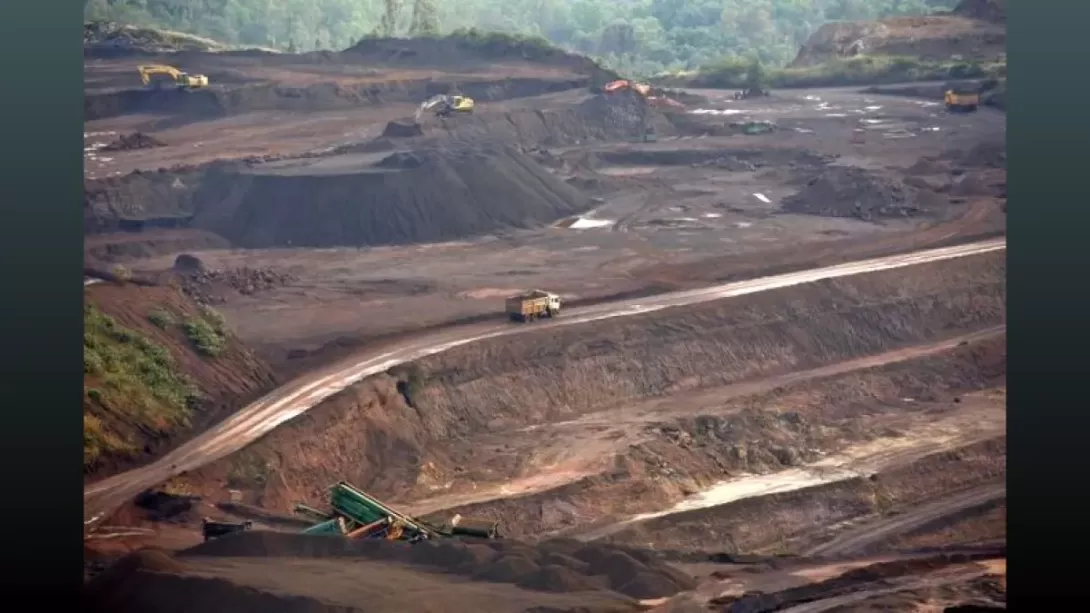
India’s iron ore industry is gaining global momentum, with production steadily rising and ambitious projections positioning the nation to soon overtake Brazil and China as the world’s second-largest producer. Vedanta Group Chairman Anil Agarwal recently spotlighted the country’s massive mineral reserves and transformative potential. This optimism is echoed in recent production data showing a 7.5% year-on-year increase. States like Odisha, Karnataka, and Chhattisgarh are central to this growth narrative. As the mining sector expands, market analysts and investors are watching Vedanta’s stock performance closely, assessing the broader economic and equity implications of this mineral-led growth story.
India’s Iron Ore Surge: On the Cusp of a Global Leap
India has long been recognized for its mineral wealth, but its recent strides in iron ore production mark a significant inflection point. Between April and January of the fiscal year 2024-25, India’s iron ore production climbed to 236 million metric tonnes (MMT), a 3.5% increase from the same period the previous year. According to provisional figures from the Ministry of Mines, the full-year production for FY24 reached approximately 275 MMT—up 7.5% year-on-year.
These metrics reflect a robust and resilient mining ecosystem, buoyed by both public and private sector players. Among the major contributors are National Mineral Development Corporation (NMDC), Steel Authority of India Ltd (SAIL), Odisha Mining Corporation, and Tata Steel. Notably, Odisha remains the powerhouse of production, contributing over half (54%) of the nation’s output, followed by Karnataka (16%) and Chhattisgarh (15%).
Anil Agarwal’s Bold Vision for Global Leadership
In a recent address, Vedanta Group Chairman Anil Agarwal offered a compelling projection: with strategic investment and policy support, India could scale up annual iron ore production to 700 MMT. This, he argued, would propel the country to second place globally—trailing only Australia.
“India is home to 33 billion tonnes of iron ore reserves,” Agarwal stated. “With these resources, we are uniquely positioned to fuel domestic demand and export at scale. The economic ripple effects—job creation, infrastructure growth, and increased government revenue—are enormous.”
This vision is not just aspirational. With consistent growth in production and ongoing capacity expansion in states like Odisha and Chhattisgarh, Agarwal’s forecast is grounded in a tangible trajectory.
Socioeconomic Upside: Mining-Led Regional Development
Beyond macroeconomic gains, the resurgence of the mining sector is poised to drive equitable regional development. States rich in mineral resources—especially Chhattisgarh, Jharkhand, and Odisha—stand to benefit immensely. Agarwal emphasized that these states, despite their resource wealth, lag in per capita income. Harnessing their geological potential could more than double their income levels relative to the national average.
“The future lies beneath the ground,” Agarwal noted. “With vision, investment, and collaboration between state and central governments, we can unlock prosperity for millions.”
Vedanta’s Role and the Market Response
Vedanta Ltd., through its subsidiary Sesa Goa Iron Ore, plays a key role in India's iron ore ecosystem, with operations spanning Goa, Karnataka, and Odisha. The company’s diversified asset base and aggressive exploration agenda position it to benefit directly from India’s mining boom.
On the stock market front, Vedanta’s performance has mirrored investor optimism about the mining sector’s prospects. The company’s share price has seen a steady uptick in anticipation of higher earnings from resource extraction. Traders are particularly focused on operating margins, expansion announcements, and regulatory developments related to mining leases and environmental clearances.
However, analysts also note that Vedanta’s exposure to global commodity cycles and debt levels are critical factors to monitor. As iron ore prices fluctuate based on Chinese demand and geopolitical factors, investor sentiment may swing accordingly.
Looking Ahead: Strategic Imperatives for Growth
For India to realize its full potential in iron ore production, several structural initiatives are essential. These include:
- Policy Stability: Consistent and investor-friendly mining policies will be crucial to attracting long-term capital.
- Infrastructure Expansion: Efficient logistics networks—from railways to ports—will be vital for transporting bulk minerals.
- Sustainable Mining Practices: Balancing growth with environmental stewardship will ensure long-term viability and social license to operate.
India stands at a crossroads—its vast iron ore reserves can catalyze an industrial renaissance, bolster export earnings, and foster inclusive development. If strategic bets align with efficient execution, the country may soon claim its spot as the world’s second-largest iron ore producer, reshaping global supply dynamics in the process.
Final Thought
As the iron ore narrative unfolds, Vedanta’s market trajectory offers a bellwether for investor confidence in India's resource economy. For stakeholders in policy, industry, and finance, the message is clear: the ground beneath India is rich, and the time to unlock its potential is now.
Comments