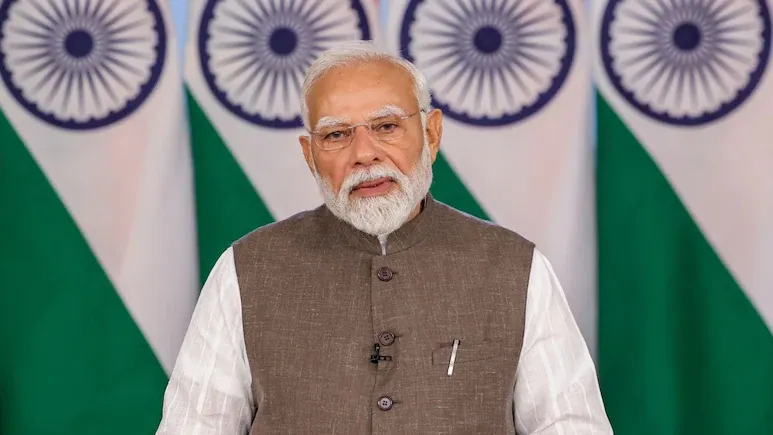
Prime Minister Narendra Modi is set to embark on a five-nation diplomatic tour from July 2 to 9, visiting Ghana, Trinidad & Tobago, Argentina, Brazil, and Namibia. The trip reflects India's evolving foreign policy, which seeks to deepen engagement with the Global South while reinforcing its position within multilateral groupings such as BRICS. The tour will cover critical areas of cooperation including trade, defence, energy, health, and technology. As India tightens its diplomatic bandwidth between Western allies and emerging powers, New Delhi is also amplifying its stance against terrorism—a theme expected to be prominently reflected in the upcoming BRICS declaration.
A Global South Recalibration
At a time of shifting geopolitical alignments, Prime Minister Modi’s planned visits to Africa and South America underscore India’s increasing emphasis on engaging with the Global South. The tour spans five nations—Ghana, Trinidad & Tobago, Argentina, Brazil, and Namibia—each representing diverse strategic interests for India, from energy and agriculture to diaspora ties and defence cooperation.
This outreach signals India’s intention to rebalance its foreign policy, moving beyond traditional Euro-Atlantic frameworks and investing in long-term partnerships with emerging economies. These regions, often overlooked in broader global diplomacy, offer India fertile ground to project leadership and deepen economic engagement.
Strategic Themes: Trade, Defence, and Sustainable Growth
The Prime Minister’s engagements will be multi-dimensional, addressing areas such as trade liberalization, agricultural collaboration, healthcare capacity building, and renewable energy transitions. In Africa and Latin America—two regions rich in natural resources and potential consumer markets—India is expected to propose frameworks for enhanced bilateral trade and investment.
Defence cooperation, especially through capacity-building and technology transfer, is also anticipated to feature in discussions, particularly with Ghana and Namibia. Meanwhile, countries like Argentina and Brazil, which hold regional influence, are key to India's aspirations for expanded BRICS cooperation and broader multilateral synergy.
The BRICS Declaration and India’s Counter-Terror Diplomacy
A parallel diplomatic development during this period is the formulation of the BRICS summit declaration, which, according to senior Indian officials, will include strong language echoing India’s long-standing concerns about terrorism. Dammu Ravi, Secretary (Economic Relations) in the Ministry of External Affairs, stated that the declaration would be “much to our satisfaction,” signaling consensus among member states on condemning terrorism in unequivocal terms.
This unified stance reinforces India’s persistent efforts to position terrorism as a global threat requiring zero tolerance—without exceptions based on political convenience or state sponsorship.
Calling Out State-Sponsored Terrorism on Global Platforms
Complementing Modi’s outreach, External Affairs Minister Dr. S. Jaishankar’s remarks at the United Nations in New York served to sharpen India’s narrative on terrorism. Speaking at the inauguration of an exhibition titled The Human Cost of Terrorism, Jaishankar emphasized that terrorism undermines the fundamental values of the United Nations and violates core human rights principles.
In an unambiguous reference to Pakistan, Jaishankar stated, “When terrorism is supported by a state against a neighbor, when it is fueled by the bigotry of extremism... it is important to call it out publicly.” This reflects a consistent Indian position advocating for the international community to adopt a no-tolerance posture against state-enabled terrorism and transnational extremism.
Navigating a Complex Diplomatic Landscape
The overlapping diplomatic events—Modi’s five-nation tour and Jaishankar’s participation in the Quad Foreign Ministers’ meeting in the United States—highlight India’s increasingly sophisticated diplomatic choreography. In an era of great power competition, New Delhi is strategically hedging by nurturing relationships across ideological and geographic divides.
India’s simultaneous engagement with Western allies (as in the Quad) and emerging powers of the Global South (as in BRICS and the tour countries) suggests a balanced foreign policy designed to maximize strategic autonomy. This dual engagement strengthens India's position as a bridge-builder in global forums, from trade to climate change and security.
Conclusion: India’s Expanding Diplomatic Footprint
As the global order undergoes tectonic shifts, India’s diplomacy under Prime Minister Modi is adapting to both risks and opportunities. The upcoming tour across Africa and South America is more than a symbolic gesture—it is a deliberate attempt to carve out a central role for India in a multipolar world.
By deepening ties with the Global South and reinforcing its counter-terrorism narrative on multilateral platforms, India is consolidating its identity as a responsible power, committed to peace, cooperation, and equitable global development.
Comments