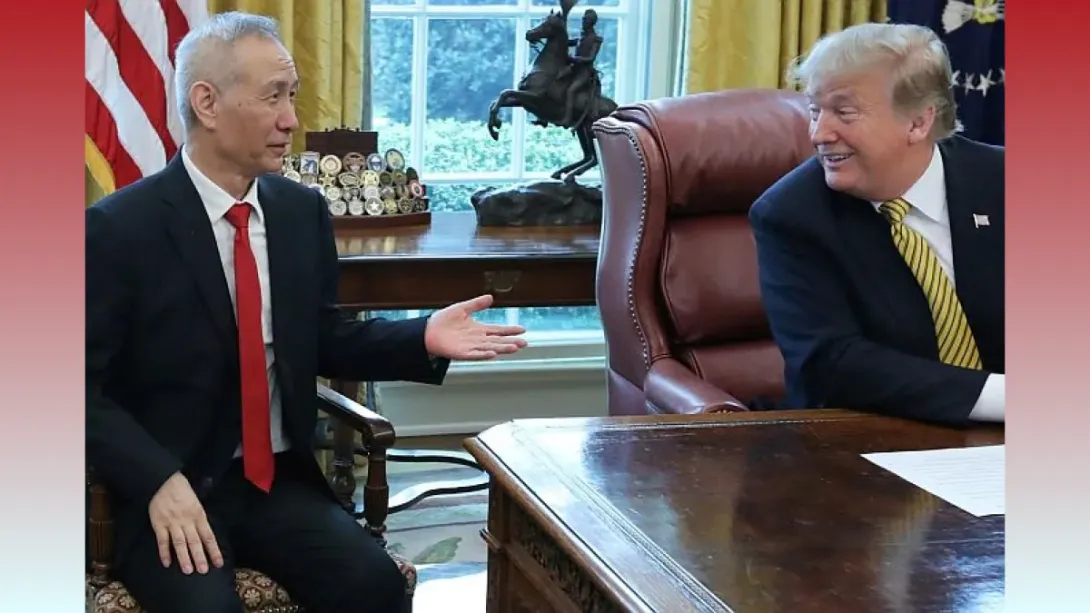
The United States and Indonesia advance their bilateral trade cooperation through a new economic framework, India is observing the developments with measured caution. The evolving agreement, which covers critical sectors such as digital trade, green energy, and mineral supply chains, has the potential to reshape regional dynamics across the Indo-Pacific. While not directly involved, India’s strategic calculus—especially in the context of its own partnerships and its role in regional trade ecosystems—is likely to be influenced by the implications of this pact. The country’s nuanced stance reflects its desire to safeguard national interests while preserving strategic autonomy in an increasingly multipolar trade landscape.
---
U.S.-Indonesia Agreement Signals Shifting Economic Alliances
The recently formalized trade and economic cooperation between the United States and Indonesia underscores Washington’s deepening engagement in Southeast Asia. The agreement includes collaboration across key areas like clean energy transition, critical mineral supply, digital governance, and resilient supply chains—topics that have gained urgency in the wake of global disruptions and increasing geopolitical fragmentation.
This bilateral alignment not only strengthens Indonesia’s regional position but also highlights a growing tendency among ASEAN nations to diversify their partnerships beyond traditional spheres. For the U.S., the deal reinforces its commitment to counterbalance China's economic influence in the region, adding another layer to the evolving Indo-Pacific architecture.
---
India's Strategic Calculus: Balancing Caution and Opportunity
India’s approach to the U.S.-Indonesia pact is marked by restraint and strategic prudence. While the agreement does not directly challenge Indian interests, it reshapes the competitive landscape in key sectors where New Delhi has ambitions—particularly in digital innovation, critical minerals, and sustainable energy infrastructure.
India has been actively building its own partnerships, both bilaterally and through plurilateral frameworks like the Quad and the Indo-Pacific Economic Framework for Prosperity (IPEF). However, the exclusion of India from some trade-centric components of these arrangements has led policymakers in New Delhi to tread carefully, balancing geopolitical alignment with economic self-reliance.
---
Implications for India’s Trade and Resource Security
One area of potential concern for India is the pact’s emphasis on critical minerals—a domain vital for electric vehicles, semiconductors, and green technologies. Indonesia’s rich reserves of nickel, copper, and other strategic resources could now become increasingly aligned with U.S.-controlled supply chains, potentially leaving India at a relative disadvantage in securing cost-competitive inputs.
Moreover, if the agreement facilitates advanced digital standards and regulatory frameworks between the two countries, India may feel pressure to adapt or risk falling behind. This could influence New Delhi’s evolving digital trade policies, where it continues to assert data sovereignty and domestic innovation protection.
---
Navigating Regional Diplomacy with Long-Term Vision
India's measured reaction should not be mistaken for disengagement. On the contrary, New Delhi has demonstrated agility in forging partnerships that suit its national interest, including deepening ties with Southeast Asia through the Act East policy and its engagement with countries like Vietnam, the Philippines, and Australia.
Rather than rushing to respond, India appears to be adopting a watch-and-calibrate strategy—an approach that allows it to remain flexible amid shifting geopolitical currents. This also enables India to focus on building indigenous capacities and strengthening existing trade corridors, such as the India-Middle East-Europe Economic Corridor (IMEC).
---
Conclusion: A Strategic Pause, Not a Retreat
The U.S.-Indonesia trade pact marks a significant moment in regional economic reordering, but for India, it is not a signal to react impulsively. Instead, New Delhi is likely to continue assessing how emerging blocs and agreements shape market access, resource flows, and diplomatic alignments. By staying observant and refining its own policy mix, India can preserve its strategic autonomy while remaining an indispensable player in the Indo-Pacific narrative. The road ahead will require deft diplomacy, economic foresight, and timely recalibration—qualities that India has increasingly brought to bear in its global engagements.
Comments