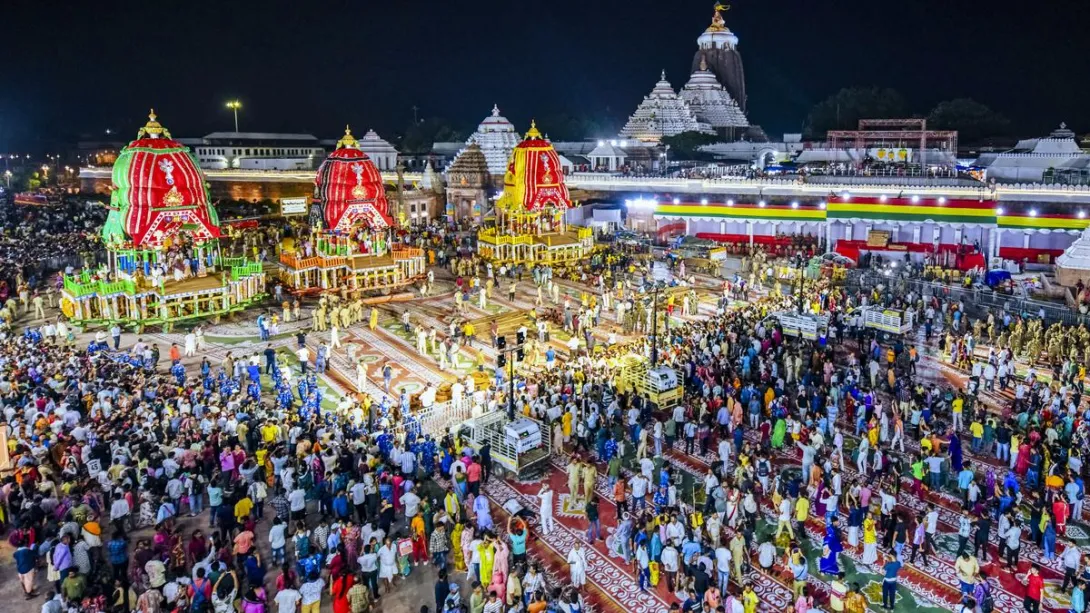
As the revered Jagannath Rath Yatra approaches in Puri, authorities have intensified preparations to ensure a secure, well-managed festival. With thousands expected to converge, the District Magistrate and Police Superintendent have outlined comprehensive safety protocols, including the deployment of NSG forces and advanced anti-drone measures. The arrival of the three chariots marks the commencement of the Gundicha Yatra, underscoring the spiritual fervor enveloping the event. Devotees from across India, like Mumbai’s Pooja Anand, describe the experience as profoundly transformative. The combination of meticulous planning and heartfelt devotion sets the stage for a smoothly executed, spiritually uplifting celebration.
Strategic Security Framework for the Rath Yatra
The annual Jagannath Rath Yatra, a monumental festival attracting vast crowds, demands rigorous security coordination. Puri’s District Magistrate, Siddharth Swain, confirmed the successful positioning of the three iconic chariots at their designated locations for the Gundicha Yatra. He emphasized the extensive security infrastructure, which includes the presence of the National Security Guard (NSG), reflecting the high priority assigned to safeguarding the event.
Superintendent of Police Vineet Agarwal elaborated on the multi-layered crowd management and safety strategies. These encompass not only physical security but also cutting-edge technological interventions, such as anti-drone units tasked with neutralizing unauthorized aerial devices. The proactive neutralization of three drones underscores the vigilance maintained to prevent disruptions, while accommodating ‘friendly’ drones engaged in authorized documentation.
Operational Coordination and Crowd Management
The festival’s success hinges on seamless operational coordination among local law enforcement, central agencies, and emergency response teams. The integrated control room established in Puri serves as the nerve center for surveillance and incident management, facilitating real-time decision-making and rapid response.
Traffic management plans have been meticulously designed to handle the influx of devotees and ensure unhindered mobility. Public convenience measures, including sanitation and medical support, have also been prioritized, reflecting a holistic approach to festival administration.
Devotee Experience: Spiritual Resonance and Cultural Significance
For devotees like Pooja Anand, who traveled from Mumbai, the Rath Yatra is more than a festival—it is a transformative spiritual pilgrimage. Anand describes her first-time participation as an “out-of-this-world” divine experience, emphasizing the unique opportunity to pull the chariot and receive blessings directly from the Lord Jagannath. She highlights the festival’s significance as the moment when the deity emerges from his sanctum to bless the universe, a sentiment that resonates deeply among the millions who partake.
Weather conditions have been favorable, with a pleasant climate and overnight rains adding a refreshing dimension to the celebrations, enhancing the overall ambiance and comfort for attendees.
Conclusion
The Jagannath Rath Yatra in Puri is poised to proceed under a robust framework of security and operational excellence. The convergence of disciplined administration and fervent devotion illustrates the complex yet harmonious orchestration of one of India’s most iconic religious festivals. As the chariots roll through the streets, the event stands as a testament to India’s rich cultural heritage, sustained by unwavering faith and meticulous planning. For stakeholders in public safety and event management, the Rath Yatra exemplifies a successful model of large-scale, secure, and spiritually enriching gatherings.
Comments