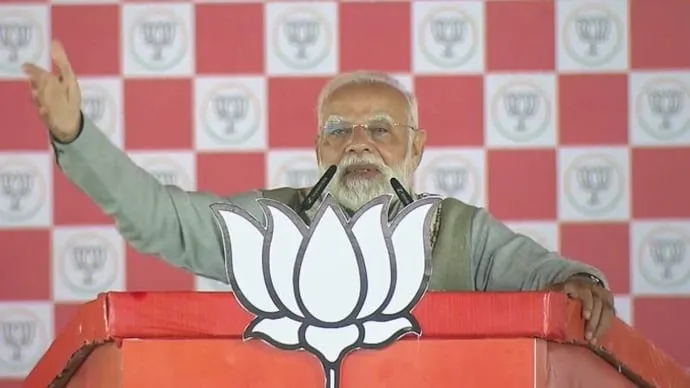
Prime Minister Narendra Modi intensified his criticism of opposition parties during a recent public address, launching a direct attack on Congress leader Rahul Gandhi and RJD’s Tejashwi Yadav. Without naming them, he referred to the duo as “two Yuvrajs from the country’s most corrupt families,” accusing their parties of nurturing dynastic politics and undermining India’s progress through decades of misgovernance. Modi’s sharp remarks came amid growing political tension ahead of key elections, signaling a renewed focus on corruption, nepotism, and accountability as dominant campaign narratives. His statements underline the BJP’s strategy to contrast governance with hereditary privilege.
---
Modi’s Sharp Rebuke to Political Heirs
Prime Minister Narendra Modi’s remarks have once again drawn national attention to the recurring theme of dynastic politics. Speaking at a political rally, the Prime Minister criticized what he described as the “two most corrupt families in Indian politics,” referring to the Congress and the Rashtriya Janata Dal (RJD).
Without naming Rahul Gandhi and Tejashwi Yadav, Modi called them “Yuvrajs” who represent political entitlement rather than public service. He accused both parties of treating governance as a family enterprise and the nation’s wealth as their personal domain, alleging that their rule had left the country mired in corruption, inefficiency, and nepotism.
---
Emphasis on Corruption and Governance
Modi’s address centered on the BJP’s ongoing anti-corruption narrative. He claimed that while previous governments were plagued by scams, cronyism, and bureaucratic lethargy, his administration has worked to bring transparency, fiscal prudence, and inclusive growth.
He asserted that corruption under Congress and RJD rule had deprived millions of Indians of basic amenities and slowed down the country’s development trajectory. Citing welfare schemes such as digital direct benefit transfers, affordable housing, and infrastructure expansion, Modi contrasted his government’s “clean governance model” with what he called the “legacy of loot and misrule” inherited from dynastic parties.
---
Dynastic Politics Under Scrutiny
The Prime Minister’s remarks also highlight an enduring theme in India’s political discourse — the clash between democratic merit and inherited privilege. The term “Yuvraj,” often used pejoratively by Modi, underscores his critique of leaders who, he suggests, rise not by competence or public trust but by family lineage.
Modi positioned the BJP as a merit-based organization, where leadership is earned through service and performance rather than inherited status. This rhetoric aims to resonate with India’s expanding youth electorate, who are increasingly skeptical of legacy politics and demand accountability and opportunity-driven leadership.
---
The Opposition’s Counter-Narrative
Though the Congress and RJD have yet to formally respond to Modi’s latest comments, leaders from both parties have in the past dismissed similar attacks as diversionary tactics. They argue that the Prime Minister’s emphasis on family politics deflects attention from unemployment, inflation, and rural distress.
Rahul Gandhi’s “Bharat Jodo Nyay Yatra” and Tejashwi Yadav’s social justice agenda have been positioned as ideological counterpoints to the BJP’s governance model, focusing on welfare, inclusivity, and equality. However, Modi’s remarks suggest the ruling party intends to keep corruption and dynasty politics as central campaign issues in upcoming elections.
---
Political Strategy and Electoral Implications
Analysts interpret Modi’s renewed attack on political dynasties as part of a calibrated election strategy. By portraying opposition leaders as symbols of corruption and entitlement, the BJP aims to consolidate voter trust in its governance and reform credentials.
The message also reinforces Modi’s image as an outsider to traditional elite politics — a leader who rose from humble beginnings and champions the common citizen. This contrast between meritocratic politics and inherited power continues to define the BJP’s electoral narrative across states.
---
Conclusion
Prime Minister Modi’s pointed remarks about “two Yuvrajs” mark an escalation in the BJP’s campaign rhetoric, blending moral critique with political strategy. By framing dynastic politics as the root of corruption and inefficiency, Modi seeks to reaffirm the BJP’s identity as a movement of reform and integrity. As India heads into another crucial election season, the contest between legacy and performance — dynasty and democracy — appears set to dominate the national political conversation once again.
Comments