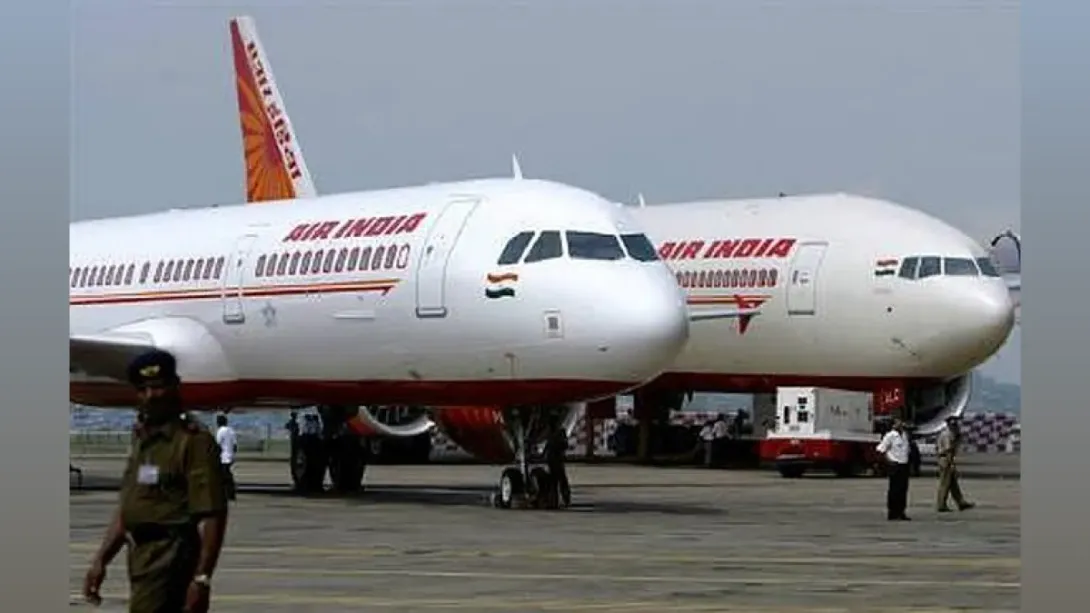
In a precautionary move prioritizing passenger safety, an Air India flight bound for Newark, United States, was forced to return to Mumbai early on Tuesday following a suspected technical malfunction. The Boeing 777 aircraft operating as Flight AI191 landed safely at Chhatrapati Shivaji Maharaj International Airport, avoiding potential risks. While no injuries were reported, both the outbound and return legs were cancelled as engineers began a detailed inspection. The incident underscores the airline’s heightened vigilance toward in-flight safety amid its broader efforts to modernize fleet reliability and operational discipline.
Incident Overview
Flight AI191, one of Air India’s key long-haul connections between Mumbai and Newark Liberty International Airport, departed as scheduled before the crew detected a suspected technical issue mid-air. Acting under standard safety protocols, the pilots elected to return to Mumbai, where the aircraft landed without incident.
Following the safe landing, Air India’s engineering division initiated a thorough examination of the aircraft to determine the nature and origin of the fault. Passengers were deboarded smoothly and provided necessary assistance, including hotel accommodations and rebooking on subsequent flights.
In an official statement, the airline confirmed that the flight’s return was purely precautionary, reiterating its “unwavering commitment to passenger safety as the highest operational priority.”
Passenger Support and Operational Response
Air India moved swiftly to mitigate the disruption’s impact. Affected passengers were accommodated in Mumbai hotels, with meals and ground transport arranged. Those scheduled on the return leg (Flight AI144 from Newark to Mumbai) were notified of the cancellation and offered alternate routing options.
The airline also activated its customer communication channels to provide real-time updates through SMS and email notifications—a step aimed at maintaining transparency and reducing uncertainty among travelers. This proactive response reflects Air India’s evolving operational management model under its ongoing transformation program, which emphasizes efficiency, customer experience, and reliability.
Technical and Safety Protocols
For commercial aviation operators, mid-air turnbacks—while inconvenient—are not uncommon, particularly when technical discrepancies are detected. Such actions align with global aviation safety standards that prioritize prevention over continuity.
In this case, Air India’s decision to recall the aircraft exemplified adherence to the Directorate General of Civil Aviation (DGCA) protocols, which require immediate evaluation when any system alert, anomaly, or sensor irregularity is detected. The airline’s engineering team is now collaborating with component manufacturers and regulators to complete a root-cause assessment before the aircraft’s return to service.
Industry experts note that the incident underscores the complexity of maintaining older wide-body fleets, especially those operating long-haul routes under demanding conditions. However, Air India’s prompt and disciplined handling suggests improved internal coordination within its maintenance and operations units.
Context: Fleet Reliability and Operational Reforms
The event comes at a time when Air India is undergoing a massive modernization push under the Tata Group’s stewardship. The airline has placed one of the world’s largest aircraft orders—covering Airbus and Boeing models—to replace aging jets and improve fuel efficiency and performance reliability.
While such technical incidents can temporarily affect public perception, they also highlight the necessity of the airline’s fleet renewal strategy. As older aircraft are gradually phased out, Air India aims to reduce unscheduled maintenance events and enhance the predictability of long-haul operations.
Analysts believe that, in the medium term, this transformation will lead to higher operational uptime, improved passenger confidence, and stronger brand competitiveness against global peers.
Broader Industry Implications
Technical events like the AI191 incident bring attention to India’s growing aviation ecosystem, where expanding fleets, dense schedules, and high utilization rates exert immense pressure on maintenance systems. Regulators, including the DGCA, have been closely monitoring recurring technical faults across airlines to ensure compliance with international airworthiness standards.
This heightened oversight reflects both the challenges and maturity of India’s aviation sector, which now handles one of the fastest-growing air travel markets globally. Airlines are increasingly investing in predictive maintenance, digital monitoring, and data analytics to identify potential faults before they escalate into operational disruptions.
Conclusion
Air India’s decision to return Flight AI191 to Mumbai exemplifies a disciplined approach to aviation safety—choosing caution over convenience. While the disruption caused passenger inconvenience, the safe landing and coordinated response reflect a maturing operational culture under the airline’s ongoing transformation.
As the engineering investigation progresses, the incident serves as a reminder that in commercial aviation, safety remains the non-negotiable cornerstone of credibility. With fleet renewal and tighter maintenance protocols underway, Air India’s broader trajectory toward operational excellence appears intact—reinforcing that reliability, not speed, defines sustainable aviation leadership.
Comments