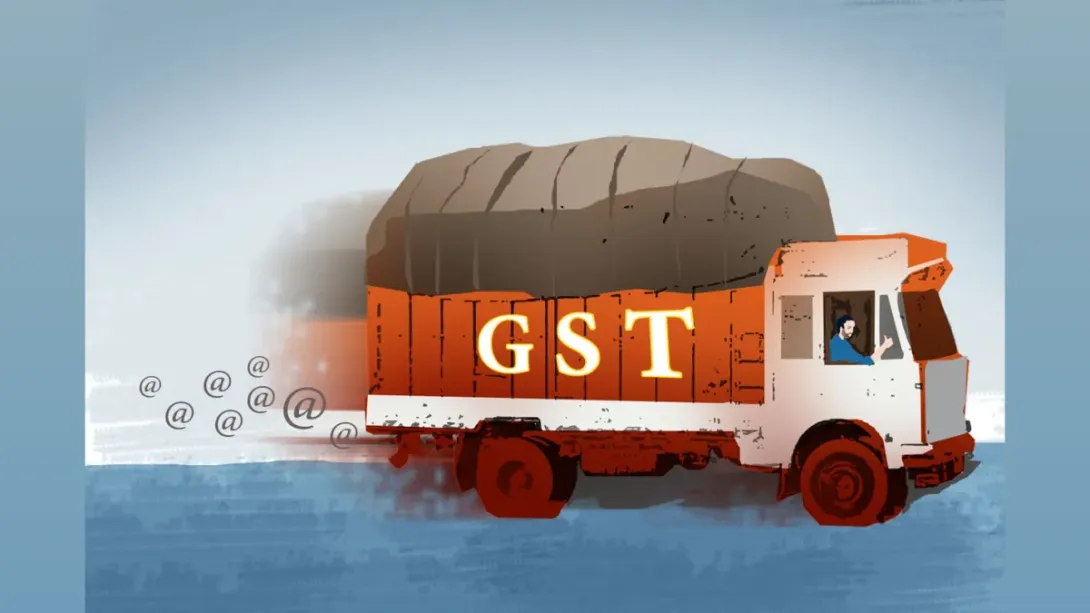
Jammu & Kashmir has introduced GST 2.0, a comprehensive tax reform designed to simplify the state’s indirect taxation structure, enhance transparency, and ensure that consumers directly benefit from rate reductions. The restructured system streamlines the earlier four-tier framework into two primary slabs—5% for essentials and 18% for most other goods and services—bringing uniformity and predictability to pricing. Nearly 99% of daily-use commodities are expected to become cheaper, while businesses are being guided through a structured seven-step implementation plan to ensure compliance, awareness, and enforcement. The reform reflects a decisive shift toward consumer-centric fiscal governance in the Union Territory.
A New Era of Simplified Taxation
The Jammu & Kashmir government has implemented the nationwide GST 2.0 reforms, marking a pivotal transition in its fiscal policy. The updated system seeks to eliminate ambiguities in pricing, reduce tax-induced inflation, and promote equitable growth by rationalizing indirect tax rates.
Previously, India’s Goods and Services Tax (GST) operated under a complex four-slab structure—5%, 12%, 18%, and 28%. Under the new GST 2.0 framework, the UT has consolidated this into just two primary rates: 5% for essential goods and daily-use items, and 18% for other goods and services. This strategic simplification aims to stimulate consumption, improve compliance, and enhance revenue predictability over the long term.
Consumer Benefits and Market Impact
The direct beneficiaries of this reform are households and small consumers. The J&K administration estimates that nearly 99% of commonly used consumer goods—including food staples, medicines, hygiene products, and educational materials—will now attract lower tax rates.
For families, the result is tangible relief in everyday spending. Reduced taxation on basic necessities and lifestyle items is expected to improve purchasing power, especially in low- and middle-income segments. Simultaneously, the business community anticipates stronger consumer demand, driven by lower effective prices.
Economists view this as a boost to the local economy, particularly in sectors like retail, FMCG, and healthcare. By lowering the tax burden, the government is effectively injecting liquidity into the consumer base, which can catalyse small business activity and retail growth across the Union Territory.
Seven-Step Protocol for Transparent Implementation
To ensure the benefits of GST 2.0 reach consumers without distortion, the J&K government has adopted a seven-step monitoring and enforcement protocol. This framework is designed to prevent profiteering, enhance compliance, and maintain consumer trust.
Clear Policy Communication: Detailed advisories are being issued to trade associations and industry groups to ensure uniform understanding of revised tax rates.
Public Awareness Campaigns: Through social media, radio, and print media, citizens are being informed about their entitlements and price expectations under the new regime.
Compliance Monitoring: Market behaviour, invoices, and pricing trends are being closely tracked to identify non-compliance.
Consumer Feedback Systems: Complaint portals and helplines will allow consumers to report irregularities in pricing or billing.
Departmental Coordination: Key departments such as Legal Metrology, Industries, Health, and Commerce are collaborating to ensure enforcement.
Continuous Education: Workshops and training programs are being organised for traders and tax officers.
Review and Adjustment: Periodic assessments will track the reform’s effectiveness and identify policy refinements.
This rigorous framework underscores the administration’s intent to make tax reform both inclusive and accountable.
Addressing Implementation Challenges
While GST 2.0 offers multiple advantages, effective execution remains critical. The risk of delayed price adjustments, selective compliance, or price manipulation by retailers could undermine public confidence. To mitigate these concerns, the government has empowered the Legal Metrology Department to penalise any entity found inflating prices under the pretext of cost changes.
Another key challenge lies in ensuring awareness among small traders and consumers in rural areas. Local-level workshops, radio campaigns, and simplified digital platforms are expected to bridge this information gap. Ensuring consistent enforcement across urban and remote districts will determine the ultimate success of GST 2.0 in J&K.
Economic Outlook and Broader Implications
The new tax architecture is poised to yield multiple macroeconomic benefits. Lower rates on essentials are likely to stimulate demand across key consumer segments, while simplification of compliance is expected to improve tax collection efficiency.
In the short term, government revenues may see modest fluctuations as businesses adjust to the new regime. However, improved compliance and broader consumption are likely to stabilise the fiscal balance. The move aligns J&K more closely with national GST practices, reinforcing its integration into India’s unified tax ecosystem.
Economists also point to the reform’s potential in enhancing investor confidence. A streamlined, transparent tax system reduces uncertainty, encourages entrepreneurship, and positions J&K as a more business-friendly destination within the Indian economy.
Conclusion
The introduction of GST 2.0 in Jammu & Kashmir marks a decisive shift toward consumer-focused governance and economic efficiency. By simplifying tax structures, ensuring oversight, and creating a robust mechanism for consumer protection, the administration is attempting to balance fiscal prudence with social welfare.
If implemented effectively, the reform could transform the UT’s market landscape—making goods cheaper, improving compliance, and fostering greater transparency in trade. Beyond taxation, it symbolizes a broader vision of governance where economic reforms translate into measurable improvements in everyday life for ordinary citizens.
Comments