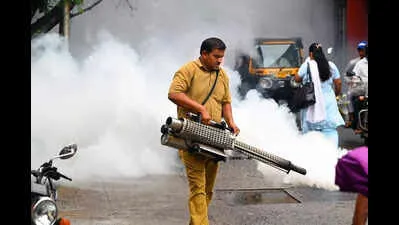
Bengaluru has witnessed a dramatic 90% drop in dengue cases this July compared to the previous month, signaling a potentially successful outcome of recent containment and awareness campaigns. While the city overall has seen a welcome decline, certain zones continue to report a higher number of cases, warranting sustained public health vigilance. Municipal health authorities are attributing the decrease to intensified vector control efforts, community participation, and favorable weather patterns. However, experts caution that complacency could reverse the gains, emphasizing the need for continued preventive measures, especially in pockets that remain dengue-prone.
---
Steep Decline Offers Relief Amid Monsoon Worries
In what health officials are describing as a significant public health achievement, Bengaluru reported a 90% decline in dengue infections in July compared to June. The sharp fall comes during the monsoon season—a period typically associated with a spike in vector-borne diseases. This development is being hailed as a testament to timely interventions and stronger community cooperation.
The Bruhat Bengaluru Mahanagara Palike (BBMP) attributes the success to door-to-door awareness campaigns, targeted fumigation drives, and improved waste management in mosquito breeding hotspots. These measures have not only curbed active cases but have also helped minimize the risk of resurgence.
---
Zonal Analysis: Pockets Still at Risk
Despite the overall improvement, certain areas remain vulnerable. According to municipal data, the South and East zones have reported the highest number of new infections in July. These include localities with high population density, ongoing construction activities, and poor drainage infrastructure—all of which create ideal breeding grounds for Aedes mosquitoes.
West and Yelahanka zones, in contrast, have shown relatively better control, recording the lowest infection counts for the month. Officials stress that even in zones with fewer cases, surveillance teams are continuing preventive efforts to ensure sustained containment.
---
Strategic Health Measures Driving the Drop
This year, the civic authorities implemented a multipronged strategy involving health workers, urban planners, and local communities. Key actions included:
Larvicide application in stagnant water collections.
Thermal fogging in high-incidence neighborhoods.
Enforcement of construction site compliance to prevent water accumulation.
School-based awareness programs to educate children and parents.
The public was also urged to eliminate mosquito breeding sites in and around their homes by regularly cleaning water tanks, pots, and other containers.
---
Weather and Public Participation as Key Enablers
Favorable weather conditions, including lower-than-expected rainfall in July, contributed indirectly to the reduction in breeding environments. Additionally, widespread public cooperation—fueled by consistent messaging on social media, local radio, and community engagement—played a pivotal role in amplifying the impact of health measures.
This synchronized response has demonstrated how urban populations can contribute meaningfully to managing seasonal health risks, especially when supported by active governance and data-driven strategies.
---
The Road Ahead: Caution Urged
Despite the encouraging statistics, health experts and civic authorities are not letting their guard down. With weather patterns likely to shift again in August and September, the possibility of a resurgence cannot be dismissed.
Officials are urging citizens to maintain vigilance by avoiding water stagnation, reporting suspected cases promptly, and supporting public health workers in surveillance efforts. The success in July is being treated as a benchmark rather than a conclusion.
---
Conclusion: A Model for Other Cities?
Bengaluru’s effective reduction in dengue cases could serve as a blueprint for other urban centers grappling with similar challenges during the monsoon season. The city’s model of combining grassroots community engagement with technology-enabled tracking and rapid response offers a scalable solution to combat vector-borne diseases in densely populated environments.
The key takeaway: proactive governance, when paired with informed and involved citizens, can transform seasonal health threats into manageable risks.
Comments