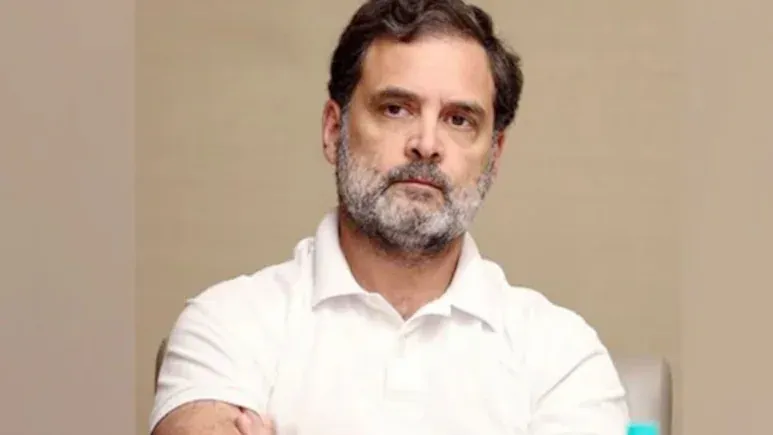
Congress leader Rahul Gandhi is scheduled to participate in a significant “chakka jam” protest in Patna on Wednesday, opposing the newly enacted labour code and the expedited special intensive revision of electoral rolls in Bihar. The demonstration, supported by the INDIA bloc and Left parties, aims to challenge policies viewed as undermining democratic rights and labour protections. Alongside Gandhi, prominent state and national opposition figures including Tejashwi Yadav and Rajesh Kumar will mobilize efforts across Bihar. The protest will culminate in a march to the Election Commission’s office amid allegations of procedural irregularities and political bias favoring the BJP-led NDA.
Opposition Unites Against Labour Code and Electoral Roll Revision
In a coordinated show of dissent, opposition leaders from the INDIA bloc, including the Congress and Left parties, have announced a state-wide “chakka jam” or road blockade protest to be held in Patna, Bihar’s capital. Rahul Gandhi, the Leader of Opposition in the Lok Sabha, is expected to join the demonstration in person, signaling the importance attributed to the protest.
This action targets two contentious issues: the new labour code, which critics argue dilutes workers' rights and social security, and the rapid special intensive revision of electoral rolls slated for completion within a month. Leaders contend that these moves threaten democratic processes and labour protections.
Leadership and Political Mobilization
The announcement was made at a press briefing attended by key figures including Tejashwi Yadav, the Leader of Opposition in the Bihar assembly; Rajesh Kumar, Bihar Congress president; Krishna Allavaru, AICC’s Bihar in-charge; alongside representatives from Left parties.
Rajesh Kumar emphasized Gandhi’s participation as a statement of solidarity with workers and voters alike. “Rahul Gandhi’s presence in Patna underscores the gravity of these issues and the collective opposition’s resolve,” he stated.
Tejashwi Yadav further elaborated that while the main protest will be staged in Patna, parallel demonstrations will occur throughout Bihar to amplify pressure on authorities. He criticized the accelerated electoral roll revision as “confused” and “politically motivated,” accusing the Election Commission of facilitating the BJP-led National Democratic Alliance’s (NDA) electoral advantage.
Concerns Over Labour Legislation and Electoral Integrity
The new labour code has sparked widespread debate, with opponents asserting that it compromises longstanding labour protections, undermining collective bargaining and easing compliance burdens for corporations at the expense of workers’ welfare. This has galvanized labour unions and political factions to unite in protest.
Simultaneously, the special intensive revision of electoral rolls — a process designed to update voter lists — has been expedited to conclude within a month. Opposition leaders allege that this rapid timeline compromises accuracy and transparency, potentially disenfranchising voters. The Election Commission, they argue, is being wielded as a political instrument to benefit the ruling NDA, undermining the democratic process.
Political Implications and Strategic Messaging
The protest represents a broader strategic effort by opposition forces to challenge the BJP-led government’s policy agenda, particularly as it pertains to labour reform and electoral management. The “chakka jam” is intended not only as a demonstration of popular dissent but also as a mechanism to rally public attention on issues perceived as threatening to democratic governance and workers' rights.
By involving Rahul Gandhi, the opposition seeks to project unity and national relevance, connecting local grievances in Bihar to wider political debates at the federal level.
Conclusion
As Bihar prepares for the upcoming “chakka jam” protest, the participation of Rahul Gandhi and other opposition leaders underscores the mounting resistance to the new labour code and the electoral roll revision. These developments highlight critical tensions within India’s democratic and economic frameworks, with significant implications for governance, electoral integrity, and labour relations.
The evolving political contestation in Bihar will be closely watched as a barometer of wider opposition strategies and the government’s response to mounting public criticism.
Comments