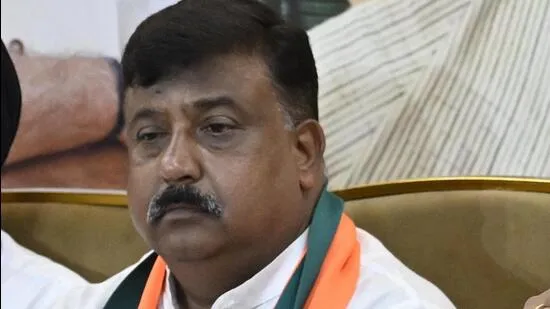
The Ludhiana West by-election served as a complex litmus test for the Bharatiya Janata Party (BJP) in Punjab, reflecting both resilience and limitations. Despite securing third place with a 22.54% vote share—slightly down from 2022—BJP leaders hailed their campaign as a success under extraordinary constraints, including the sudden demise of state in-charge Vijay Rupani. With just 13 days to campaign and a last-minute candidate nomination, the BJP still managed to consolidate its core base. As speculation grows about a renewed alliance with Shiromani Akali Dal (SAD), the bypoll has raised critical questions about Punjab's evolving political dynamics ahead of 2027.
BJP Battles Odds in a Compressed Campaign
The BJP’s performance in the Ludhiana West bypoll was marked by compressed timelines and tragedy. Jiwan Gupta, the party’s candidate, was finalized just a day before the nomination deadline, leaving merely 13 days for campaigning. The sudden death of senior BJP leader and former Gujarat Chief Minister Vijay Rupani in an Ahmedabad plane crash added to the party’s internal challenges.
Despite these setbacks, BJP leaders remained optimistic. Former state BJP president Ashwani Sharma highlighted the party's unity during the campaign as its biggest takeaway. “Had we had more time, the results could have been better. But the unity shown by the party in a difficult time is the real achievement,” he remarked.
Vote Share Trends and Historical Context
In the context of Punjab’s turbulent political terrain, the BJP’s 22.54% vote share in the bypoll is a modest dip from the 23.95% it garnered in the 2022 assembly elections. However, it still reflects relative stability compared to the more significant drop from its high of 30.1% in 2017, when it contested in alliance with the Shiromani Akali Dal.
The Ludhiana West constituency has not seen a BJP victory since 2012, and despite being considered a long shot in this election, the party maintained a respectable position, securing over one-fifth of the vote under significant constraints.
Star Campaigners and the Shift Toward Local Leadership
To compensate for limited campaign time, the BJP deployed a strong lineup of star campaigners, including Delhi MLA Rekha Gupta, Haryana Chief Minister Nayab Singh Saini, and former Union Minister Anurag Thakur. Notably, state BJP chief Sunil Jakhar, previously absent from local electoral contests, actively engaged in the campaign.
Jakhar praised the party’s strategic pivot to field Jiwan Gupta—a grassroots-level leader—highlighting a shift away from parachute candidates toward nurturing local talent. “People are now looking for a strong alternative to the AAP and Congress. This election signals that BJP must be battle-ready for 2027,” he said.
SAD-BJP Alliance: Revival or Reconsideration?
While the Shiromani Akali Dal (SAD) failed to make significant gains in the bypoll—securing just 8% of the vote—the combined tally of SAD and BJP reached 28,526 votes, closely trailing the AAP’s 35,179. This near parity has reignited conversations around a potential alliance between the former partners ahead of the 2027 assembly elections.
However, BJP insiders remain cautious. “There’s talk of an alliance, but internal divisions within the SAD would make negotiations difficult,” said a senior BJP functionary. The two parties had parted ways in 2020 amid the farmer protests and subsequently contested the 2024 Lok Sabha elections independently. Yet, in several seats, their combined vote share outperformed both the AAP and Congress.
Strategic Takeaways for 2027 and Beyond
The Ludhiana West result, while not a victory, has provided the BJP with crucial insights. The party’s ability to mobilize swiftly, maintain organizational unity, and sustain a vote base in an AAP-leaning constituency demonstrates its growing adaptability in Punjab.
As the BJP eyes the 2027 assembly elections, its future prospects may depend heavily on two factors: the consolidation of its internal leadership in the state and whether it reconsiders a tactical alliance with the SAD. If managed astutely, these could alter the balance of power in Punjab’s polarized electoral landscape.
Conclusion
The Ludhiana West bypoll was more than a routine electoral contest—it was a referendum on strategy, resilience, and evolving political alliances in Punjab. While the BJP did not emerge victorious, it succeeded in projecting organizational discipline and a recalibrated approach focused on local leadership. As the party assesses its roadmap to 2027, this bypoll could serve as both a wake-up call and a roadmap for reinventing its political relevance in the state.
Comments