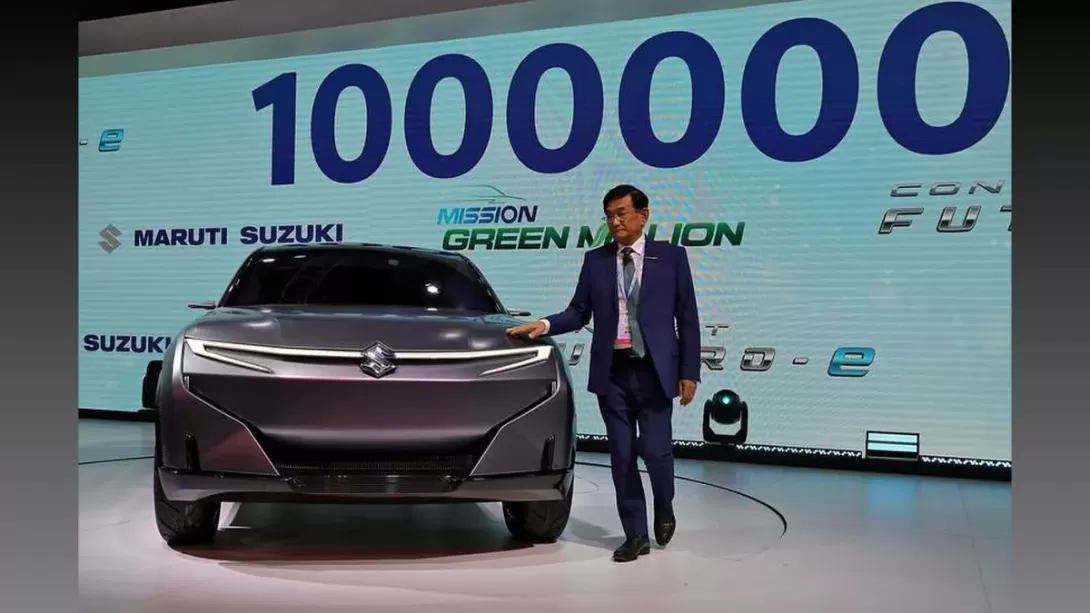
Maruti Suzuki, India's largest carmaker, is embarking on an ambitious plan to enhance its production capabilities with a focus on flexibility, as it prepares to ramp up output and introduce electric vehicles (EVs) into its lineup. The company aims to increase its annual production capacity by 20 lakh units by 2030-31 and introduce a diverse range of models, including EVs. This strategy involves enhancing manufacturing plants to accommodate the shift to electric mobility, although profitability concerns related to EV production remain. Additionally, Maruti Suzuki is preparing for stricter emission norms in the near future.
Strategic Expansion Plans: Flexibility at the Core
Maruti Suzuki is aiming to significantly boost its production capacity over the next decade. Currently, the company operates with an annual production capability of around 26 lakh units across its plants in Haryana and Gujarat. The company plans to increase this capacity by 20 lakh units by 2030-31, with an expanded model range that includes 28 different vehicles.
A notable aspect of this strategy is the emphasis on flexibility in manufacturing. Maruti Suzuki is modernizing its plants to ensure that they can accommodate the production of various models, including electric vehicles (EVs). This adaptability will be crucial as the company responds to market shifts and consumer demand for environmentally friendly vehicles.
As of now, Maruti Suzuki's two plants in Haryana—located in Gurugram and Manesar—together produce approximately 16 lakh units per year. A new facility in Kharkhoda, Haryana, has also begun production, with an initial capacity of 2.5 lakh units. This facility will focus on manufacturing the popular compact SUV, Brezza.
Transition to Electric Vehicles
The integration of electric vehicles into Maruti Suzuki's product line represents a significant pivot in the company's long-term strategy. The company is set to launch its first EV, the e-Vitara, in September this year, with most of the first-year production slated for international markets. Maruti Suzuki has emphasized that its manufacturing setup will evolve to accommodate EV production, which comes with distinct challenges compared to conventional internal combustion engine (ICE) vehicles.
Rahul Bharti, Senior Executive Officer at Maruti Suzuki, explained that EVs are inherently heavier than traditional vehicles due to the weight of their batteries and reinforced bodies. As a result, modifications in the production lines will be necessary to handle these changes. However, the company is keen on making its plants in both Gujarat and Kharkhoda flexible enough to handle the shift towards electric mobility without significant disruption to overall operations.
Profitability Concerns and Industry Realities
Despite the ambitious plans to ramp up EV production, Maruti Suzuki is mindful of the profitability challenges that electric vehicles present. Bharti acknowledged that EVs typically have lower profit margins compared to traditional ICE vehicles. This is an industry-wide concern, and the company is aware that the lower profitability of EVs is one of the key reasons for government incentives, such as the 5% GST rate and various support schemes designed to boost EV adoption.
While Maruti Suzuki is focused on decarbonization through electric vehicles, the company is also exploring multiple other technologies to reduce its overall carbon footprint. This diversified approach will enable Maruti Suzuki to balance the transition to EVs with its continued efforts to maintain profitability, especially as the industry navigates the early stages of electric mobility's commercial viability.
Export Markets: A Key Driver for Growth
Exports are expected to play a pivotal role in Maruti Suzuki’s growth strategy. Bharti mentioned that exporting EVs will allow the company to achieve economies of scale, which could help mitigate some of the cost challenges associated with EV production. Exports also provide an opportunity for Maruti Suzuki to capture market share in regions that may offer better pricing power or less price sensitivity compared to the domestic market.
This international focus will not only support the financial viability of EV production but also help strengthen Maruti Suzuki’s position as a global player in the automotive industry.
The Road Ahead: Navigating Emission Norms
As part of its ongoing efforts to align with global sustainability trends, Maruti Suzuki is preparing for the impending implementation of stricter Corporate Average Fuel Economy (CAFE-III) norms. These regulations, aimed at reducing carbon dioxide emissions from vehicles, are expected to be finalized soon. Bharti confirmed that the industry is already in discussions with the Indian government and related agencies, with an official announcement expected within the next couple of months.
Maruti Suzuki’s proactive engagement in this matter signals its commitment to meeting stringent environmental standards while continuing to innovate within the automotive space.
Conclusion: A Transformative Era for Maruti Suzuki
Maruti Suzuki is at a pivotal moment in its journey, transitioning from being a traditional carmaker to a modern, forward-thinking company with a strong emphasis on electric mobility and sustainable manufacturing. With its ambitious production plans, ongoing plant upgrades, and a focus on flexible manufacturing, Maruti Suzuki is preparing for the future of the automotive industry.
While profitability concerns surrounding EV production remain a challenge, the company’s diversified approach to decarbonization and its focus on international markets provide promising avenues for long-term growth. As the company navigates the challenges of EV adoption and stricter emission norms, its commitment to innovation and flexibility will likely keep it at the forefront of India’s automotive sector for years to come.
Comments