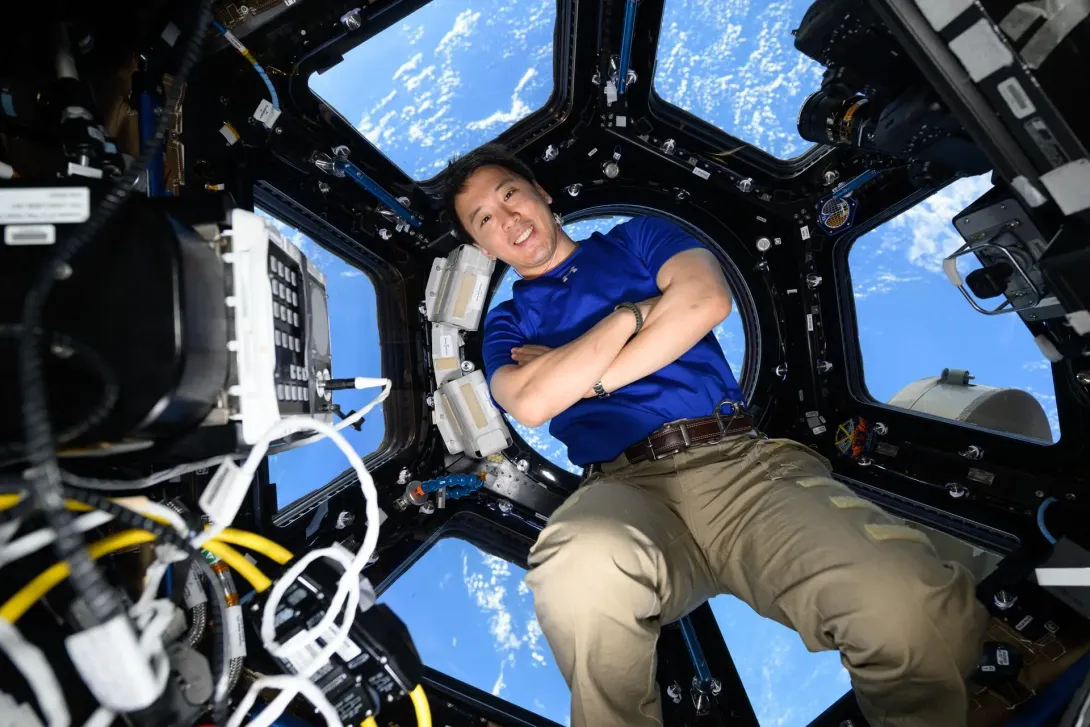
NASA astronaut Jonny Kim has safely returned to Earth following the completion of his mission aboard the International Space Station (ISS), marking another successful chapter in the United States’ human spaceflight program. Kim’s return concludes months of scientific research, operational duties and international collaboration conducted in low-Earth orbit. The mission contributed valuable data across multiple disciplines, including human health, materials science and space technology. His journey underscores NASA’s continued emphasis on long-duration missions, which are seen as critical stepping stones for future lunar exploration and eventual crewed missions to Mars.
Mission Completion and Earth Return
Jonny Kim’s return followed a carefully coordinated undocking and descent sequence, culminating in a safe landing under established recovery protocols. NASA confirmed that post-landing medical checks were routine, with the astronaut reported to be in good health.
Such returns mark the end of an intensive phase of spaceflight, as astronauts readjust to Earth’s gravity after extended periods in microgravity.
Scientific Contributions Aboard the ISS
During his time on the ISS, Kim was involved in a wide range of scientific experiments designed to advance understanding of human physiology in space. Research conducted during the mission focused on muscle atrophy, bone density loss and cardiovascular changes, all of which are critical considerations for long-duration exploration.
The mission also supported experiments in fluid dynamics, materials testing and technology demonstrations with potential Earth-based applications.
Role in International Collaboration
The ISS remains one of the world’s most significant examples of sustained international cooperation, and Kim’s mission reflected that collaborative spirit. Working alongside astronauts from multiple space agencies, he contributed to joint research initiatives and station maintenance activities.
Such partnerships continue to be central to NASA’s broader strategy of shared expertise and cost efficiency in space exploration.
Strategic Importance for Future Missions
NASA officials view missions like Kim’s as essential preparation for upcoming Artemis lunar missions and future crewed expeditions beyond Earth orbit. Data gathered from extended stays aboard the ISS help refine spacecraft systems, life-support technologies and astronaut training programs.
These insights are expected to play a pivotal role as space agencies push toward deeper and longer missions in space.
Comments