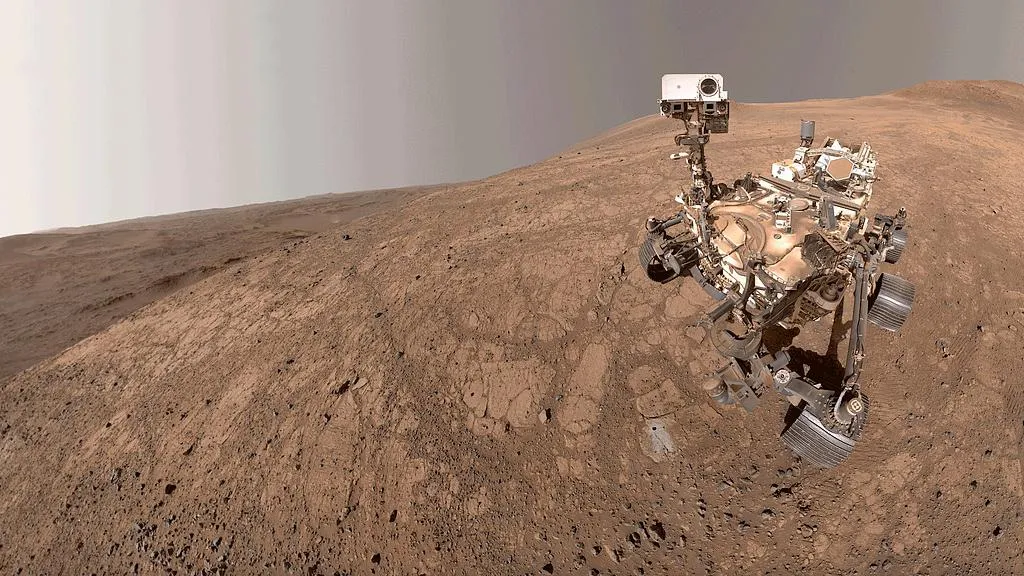
NASA’s Perseverance rover has captured the first evidence of lightning activity on Mars, providing groundbreaking insights into the planet’s atmospheric dynamics. Detected through high-resolution sensors, these electrical discharges suggest that Mars’ thin atmosphere can support localized electrical phenomena, impacting dust storms and potentially influencing chemical reactions on the surface. Scientists highlight that lightning may play a role in producing reactive compounds critical for understanding Mars’ climate history and habitability potential. This discovery opens a new frontier in planetary meteorology, emphasizing the importance of in-situ exploration for unraveling complex weather systems beyond Earth.
Detecting Martian Lightning
Perseverance, operating in the Jezero Crater, employed its suite of atmospheric sensors and cameras to identify short, intense flashes indicative of lightning. These events, while less frequent than terrestrial lightning, demonstrate that even Mars’ thin, low-pressure atmosphere can sustain electrical discharge under certain conditions.
The observations reveal that dust storms and turbulent weather patterns on Mars create the right environment for charge separation, leading to lightning generation. Scientists are now analyzing the spatial and temporal patterns to better understand the phenomenon.
Implications for Martian Atmosphere and Climate
Lightning on Mars provides a unique window into atmospheric chemistry. Electrical discharges can produce reactive molecules such as nitrogen oxides and peroxides, which may contribute to surface chemistry transformations.
Understanding these processes is critical for reconstructing Mars’ climatic evolution, as such reactions could influence the stability of organic compounds and water-related chemistry, impacting assessments of past habitability.
Technological Contributions of Perseverance
The detection was enabled by Perseverance’s advanced instrumentation, including its Mars Environmental Dynamics Analyzer (MEDA) and high-speed imaging systems. Real-time data collection and AI-driven analysis allow researchers to detect transient events like lightning with unprecedented accuracy.
This demonstrates the value of combining robotics, remote sensing, and autonomous data processing in planetary exploration.
Broader Scientific Significance
Lightning detection on Mars enriches comparative planetology, helping scientists understand weather systems across the solar system. By studying electrical phenomena on Mars, researchers can refine models of atmospheric dynamics for both Mars and Earth, and better predict weather-related challenges for future human missions.
The discovery also informs laboratory simulations of Martian conditions, aiding in designing experiments to explore prebiotic chemistry and potential life-supporting processes.
Future Research Directions
Ongoing studies will focus on correlating lightning activity with dust storms, seasonal changes, and atmospheric pressure fluctuations. Collaborative observations with orbiters and future missions will provide complementary data to map Martian electrical activity globally.
Scientists aim to quantify energy outputs, frequency, and chemical impacts of lightning, enhancing our understanding of the interplay between Mars’ atmosphere and surface processes.
Conclusion
Perseverance’s detection of lightning on Mars marks a milestone in planetary science, revealing a previously unobserved aspect of Martian weather. Beyond expanding knowledge of atmospheric physics, the finding may reshape understanding of chemical processes critical to the planet’s evolution and habitability. This discovery underscores the transformative role of robotic exploration in uncovering complex phenomena on other worlds, paving the way for future scientific breakthroughs and human exploration.
Comments