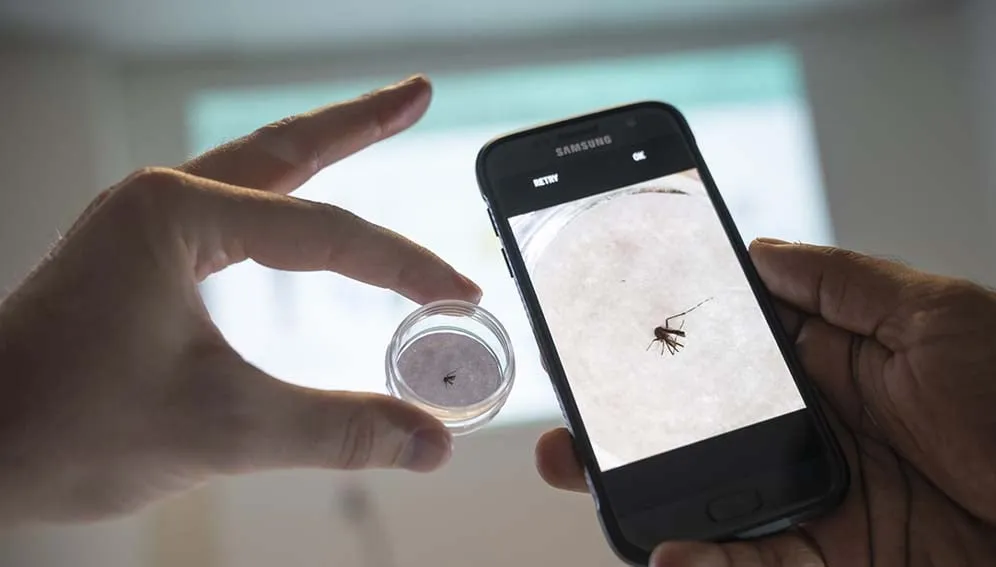
Researchers using a combination of artificial intelligence and community-driven science may have identified the first-ever presence of Anopheles stephensi—a highly invasive malaria-carrying mosquito—in Madagascar. A photo submitted by a citizen from Antananarivo via NASA’s GLOBE Observer app was analyzed with AI algorithms, which classified the larva with more than 99% confidence. The species’ potential arrival in Madagascar raises alarm due to its adaptability to urban settings and artificial containers. The finding illustrates how mobile technology, machine learning, and public participation can revolutionize global disease surveillance.
A Technological Breakthrough in Disease Surveillance
Scientists from the University of South Florida (USF) have integrated AI with citizen science to detect what could be Madagascar’s first Anopheles stephensi mosquito, according to their latest research. Leveraging image-recognition algorithms trained on thousands of verified mosquito images, the AI system analyzed a larval photo submitted via NASA’s GLOBE Observer app. The result: an over-99% match confidence that the larva is An. stephensi.
This achievement has potential public health implications, because An. stephensi is known for its ability to thrive in urban environments and artificial containers, unlike many native African malaria vectors.
The Citizen Science Component
The initial detection originated from a close-up photo of a mosquito larva in a discarded tire in Antananarivo, submitted by a local resident through the GLOBE Observer app. This participatory approach empowers community members to contribute to vector surveillance simply by using a smartphone and a clip-on magnification lens.
AI models, trained both to identify species and even determine the sex of mosquitoes from images, provided a powerful analytic layer. While molecular confirmation is not possible—because the actual larval specimen was discarded before it could be genetically tested—the consistent AI predictions across multiple models lend substantial weight to this tentative identification.
Public Health Risks and Implications
If validated, the presence of Anopheles stephensi in Madagascar would represent a major shift in the island’s malaria risk profile. Unlike many malaria-carrying mosquitoes that rely on natural water bodies, An. stephensi can breed in urban containers such as discarded tires and buckets.
This species is considered a growing threat across Africa. Estimates suggest its spread could place an additional 126 million people at risk. Traditional surveillance methods, such as trapping, are costly, labor-intensive, and limited in geographic scope. AI-driven, citizen-led systems offer a more scalable alternative.
Challenges and Limitations
Despite its promise, the approach carries inherent limitations. The AI tool requires high-resolution larval images taken with a 60-times clip-on smartphone lens, a technical requirement that may not be widely accessible. Furthermore, many residents lack smartphones or reliable internet access, reducing participation potential.
Researchers also note that awareness of the citizen-science apps is limited, affecting uptake. Since the sample larva was destroyed before genetic testing, definitive confirmation is not yet possible—a significant caveat acknowledged by the team.
Strategic Potential for Global Health
The study highlights how emerging technologies like machine learning and public participation can complement conventional epidemiological surveillance. By decentralizing detection efforts, health agencies could respond more swiftly to invasive vector threats. USF is already developing AI-enabled smart traps that could detect An. stephensi remotely, potentially bolstering early-warning systems in at-risk regions.
For Madagascar—and other regions vulnerable to mosquito-borne diseases—such hybrid systems could fill critical gaps, particularly where traditional resources are constrained.
Conclusions and the Way Forward
The potential discovery of Anopheles stephensi in Madagascar via AI and citizen science marks a pivotal moment in vector surveillance. While genetic verification remains outstanding, the high-confidence AI classification underscores the robustness of this new paradigm.
To capitalize on this, public health agencies will need to invest in outreach, provide affordable imaging tools, and foster community engagement. Given the species’ urban adaptability, surveillance systems must evolve—and leveraging AI and local participation may be the most effective path forward.
Comments