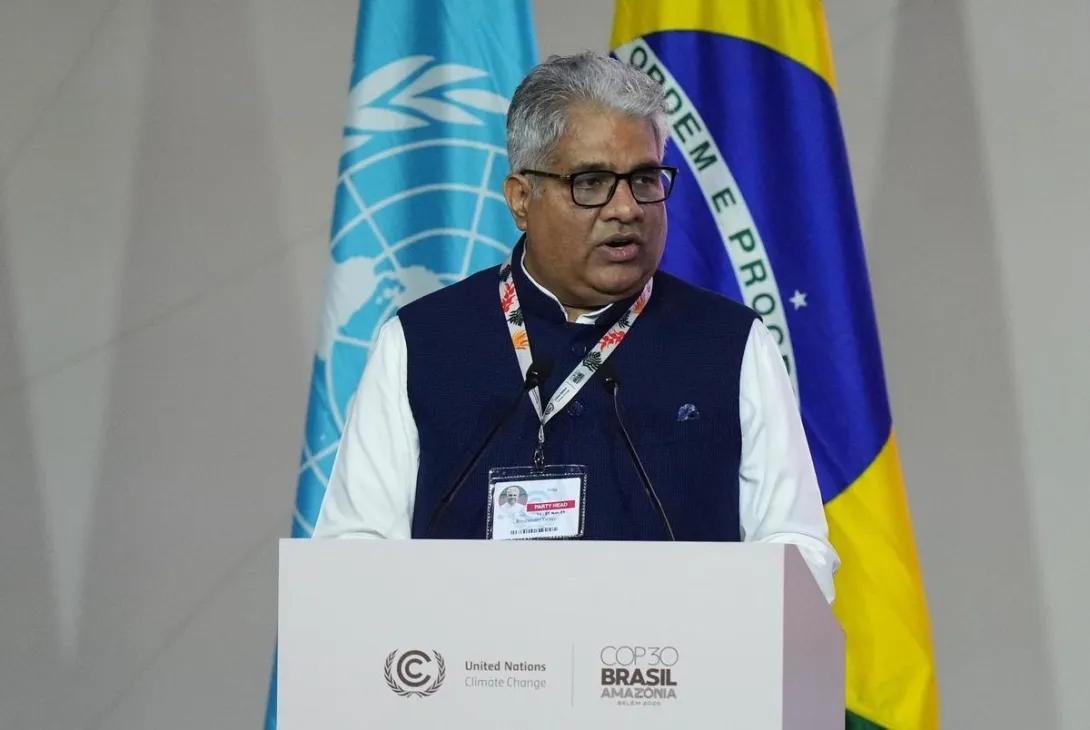
India is preparing to submit its updated climate commitments to the United Nations by the end of December, as confirmed by Union Minister Bhupender Yadav. The revised targets will outline the country’s next phase of emissions-reduction goals, renewable-energy expansion, and adaptation strategies under the Paris Agreement. With global expectations rising ahead of upcoming climate negotiations, India’s updated Nationally Determined Contributions (NDCs) are expected to reflect both ambition and realism, balancing developmental needs with environmental responsibilities. This article examines the significance of India’s updated climate roadmap, the policy drivers behind it, and its potential economic and environmental implications.
---
India’s Revised Commitments Underway
India’s decision to finalize and submit its updated NDCs by late December signals a renewed push toward climate governance. According to Minister Yadav, the country is aligning its domestic policy framework with international expectations, ensuring that the new commitments reinforce India’s long-term environmental planning.
The updated targets will form a crucial part of India’s strategy to meet global climate obligations while simultaneously advancing its economic and energy-security goals.
---
Focus Areas in the New Climate Roadmap
Although the government has not publicly detailed the final draft, officials indicate that the updated submission will likely emphasize:
Expansion of renewable-energy capacity
Larger targets for emissions intensity reduction
Strengthening carbon sinks through afforestation
Greater emphasis on climate-resilient infrastructure
Technology-driven adaptation strategies
These elements align with India’s ongoing efforts to transition toward cleaner energy while safeguarding growth in manufacturing, transport, and agriculture.
---
Balancing Development and Climate Responsibility
India continues to highlight the need for climate equity, arguing that developing nations require adequate time, technology, and funding to meet ambitious climate goals.
While India ranks among the world’s largest emitters in absolute terms, its per capita emissions remain significantly lower than those of many developed economies. This context shapes the country’s stance on shared but differentiated responsibilities—an essential principle in global climate negotiations.
---
Economic Implications of the Updated Targets
The updated NDCs are expected to unlock new investment opportunities in renewable energy, green hydrogen, electric mobility, and sustainable manufacturing. Analysts anticipate:
Increased capital flows into solar and wind projects
Job creation in green technology sectors
Expanded research and innovation in decarbonization
New public–private partnerships for climate adaptation
A stronger climate agenda could also improve India’s standing in global ESG (Environmental, Social, and Governance) indices, potentially attracting foreign institutional investment.
---
Strengthening India’s Global Climate Position
Submitting updated climate commitments ahead of schedule reinforces India’s credibility in multilateral forums. It signals the country’s intent to play a proactive role in shaping global climate policy, particularly in areas such as green finance, adaptation funding, and technology transfer.
By presenting a clear, forward-looking roadmap, India positions itself as a responsible yet pragmatic actor—committed to climate progress without compromising developmental aspirations.
---
Conclusion: A Step Toward a Greener Future
India’s upcoming submission to the U.N. represents more than a procedural update; it reflects a strategic recalibration of the nation’s long-term environmental priorities. As the global climate landscape evolves, India’s revised commitments will play a central role in shaping its energy future, economic resilience, and environmental stewardship.
Comments