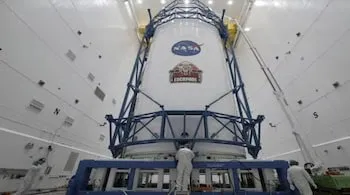
NASA has embarked on a landmark mission, Mission Escapade, deploying two spacecraft to explore Mars’ geological and atmospheric secrets. The twin probes aim to gather unprecedented data on the Red Planet’s climate, surface composition, and potential signs of past life, providing critical insights for future human exploration. Leveraging cutting-edge sensors, autonomous navigation, and long-duration power systems, these spacecraft represent a major technological milestone. Scientists anticipate that the mission will fill key knowledge gaps about Mars’ evolution and habitability, while informing planetary defense and interplanetary exploration strategies. Mission Escapade underscores NASA’s continued leadership in robotic space exploration.
---
Mission Objectives: Unlocking the Red Planet
Mission Escapade has a multi-pronged scientific agenda. The spacecraft are equipped to analyze surface minerals, atmospheric composition, and seasonal climate changes, helping researchers understand Mars’ transformation over millions of years. By investigating potential water reservoirs and past habitable environments, the mission seeks clues about whether the planet ever supported microbial life.
Additionally, the twin spacecraft are designed to operate in tandem, providing complementary datasets that improve spatial coverage and increase the accuracy of observations. This dual-probe strategy enables simultaneous exploration of multiple regions, optimizing scientific return within a single mission window.
---
Advanced Technology at the Forefront
Each spacecraft incorporates state-of-the-art instruments, including high-resolution cameras, spectrometers, and environmental sensors capable of detecting subtle chemical signatures. Autonomous navigation systems allow for precise orbital adjustments and obstacle avoidance, ensuring optimal positioning for surface imaging and atmospheric sampling.
The probes are powered by long-duration radioisotope thermoelectric generators, enabling continuous operation through the harsh Martian winter. These technologies mark a significant leap in NASA’s capability to conduct extended planetary science missions, paving the way for future manned exploration.
---
Global Scientific Collaboration
Mission Escapade also exemplifies international cooperation. NASA has partnered with research institutions and space agencies worldwide to maximize scientific expertise and resource sharing. Data from the twin spacecraft will be openly available, allowing planetary scientists, climatologists, and astrobiologists to conduct independent analyses and contribute to a comprehensive understanding of Mars.
Such collaboration not only accelerates knowledge acquisition but also strengthens the global space exploration ecosystem, encouraging innovation and interdisciplinary research.
---
Implications for Future Exploration
The mission’s findings could directly influence future human missions to Mars, particularly in identifying safe landing sites, potential in-situ resources, and environmental hazards. Insights into Martian climate and surface conditions will assist in designing habitats, life-support systems, and transportation strategies, making sustained human presence feasible.
Furthermore, understanding Mars’ atmospheric and geological dynamics enhances planetary defense measures, allowing better prediction of dust storms, surface changes, and orbital debris behavior. Mission Escapade therefore represents both a scientific and operational milestone in humanity’s journey to the stars.
---
Conclusion: A Leap Toward Mars’ Secrets
Mission Escapade demonstrates NASA’s commitment to pushing the boundaries of robotic exploration. By launching two technologically advanced spacecraft, the agency aims to decode Mars’ climate history, geological evolution, and potential for life. The mission not only promises groundbreaking scientific discoveries but also lays the groundwork for future human exploration. With meticulous planning, cutting-edge technology, and international collaboration, Mission Escapade reinforces the strategic and scientific importance of Mars as humanity’s next frontier.
Comments