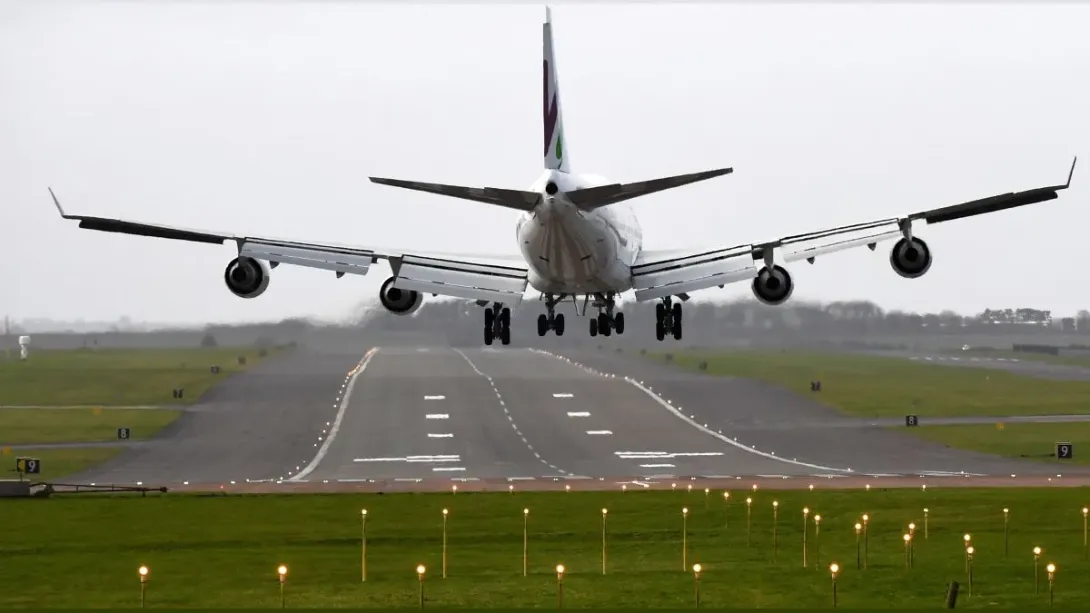
An international flight operated by IndiGo was compelled to return to its origin after encountering unexpected airspace restrictions over Eritrea. The decision was taken as a precautionary safety measure following regulatory curbs affecting the aircraft’s planned route. Aviation authorities and airline officials confirmed that the aircraft turned back to ensure compliance with international flight safety protocols. The incident underscores the growing impact of geopolitical developments and regional airspace restrictions on global aviation routes. Airlines operating long-haul services increasingly face operational challenges, including sudden airspace closures, which can disrupt flight schedules and increase operational costs.
Flight Diversion Triggered by Airspace Restrictions
An international flight operated by IndiGo was forced to return mid-journey after encountering airspace restrictions over Eritrea. The aircraft, which had been en route to its international destination, altered its course after the airline became aware of regulatory limitations affecting the flight path.
Airline officials confirmed that the aircraft returned to its departure airport as a precautionary measure to ensure passenger safety and regulatory compliance. All passengers and crew members remained safe, and the airline initiated standard procedures to manage the disruption.
Such operational decisions are common in aviation when unforeseen geopolitical or regulatory developments affect designated air corridors.
Impact of Geopolitical Developments on Aviation Routes
Airspace management is closely tied to geopolitical dynamics, and sudden restrictions can significantly affect international flight operations. When airspace becomes unavailable due to political tensions, military activity or regulatory changes, airlines must quickly identify alternative routes or suspend operations.
In recent years, aviation routes across several regions—including parts of Eastern Europe, the Middle East and North Africa—have experienced disruptions due to evolving geopolitical conditions.
For carriers like IndiGo, which has expanded its international network rapidly, such developments require continuous monitoring of global airspace conditions and rapid operational adjustments.
Operational and Financial Implications for Airlines
Unexpected airspace restrictions can have significant operational and financial consequences for airlines. Rerouting flights or returning aircraft to their point of origin increases fuel consumption, disrupts crew schedules and affects passenger connections.
In addition, airlines may incur additional logistical costs associated with passenger accommodations, flight rescheduling and operational realignment. These challenges can impact airline profitability, particularly for long-haul international routes where margins are already sensitive to fuel prices and regulatory costs.
As international aviation becomes increasingly interconnected, airlines must invest heavily in flight planning technologies and geopolitical risk assessment to mitigate such disruptions.
Safety Protocols and Aviation Regulations
International aviation operates under strict safety regulations governed by global organizations such as the International Civil Aviation Organization. Airlines are required to comply with airspace advisories issued by national aviation authorities and international regulatory bodies.
If a designated route becomes restricted or potentially unsafe, airlines must immediately adjust their operations. In many cases, returning the aircraft to its origin is considered the safest and most practical solution, particularly if alternative routes are unavailable or would significantly extend flight duration.
Such decisions prioritize passenger safety and regulatory compliance over operational convenience.
IndiGo’s Expanding International Footprint
IndiGo, India’s largest airline by market share, has significantly expanded its international presence in recent years. The carrier now operates flights to numerous destinations across Asia, the Middle East and Europe.
As the airline continues to grow its global network, it must navigate an increasingly complex aviation environment shaped by geopolitical developments, regulatory changes and fluctuating airspace accessibility.
Industry analysts note that operational resilience and flexible route planning will remain critical for airlines seeking to maintain reliability amid evolving global conditions.
Outlook for the Global Aviation Industry
The incident highlights a broader reality facing modern aviation: global air travel is deeply influenced by geopolitical and regulatory dynamics. Airspace closures and route restrictions can emerge with little warning, requiring airlines to adapt quickly.
For the aviation sector, maintaining safety while managing operational efficiency remains a delicate balance. Investments in advanced navigation systems, real-time risk monitoring and international cooperation are becoming essential to ensure uninterrupted global connectivity.
As airlines expand their networks and global mobility increases, the ability to respond swiftly to airspace disruptions will remain a critical component of modern aviation strategy.
Comments