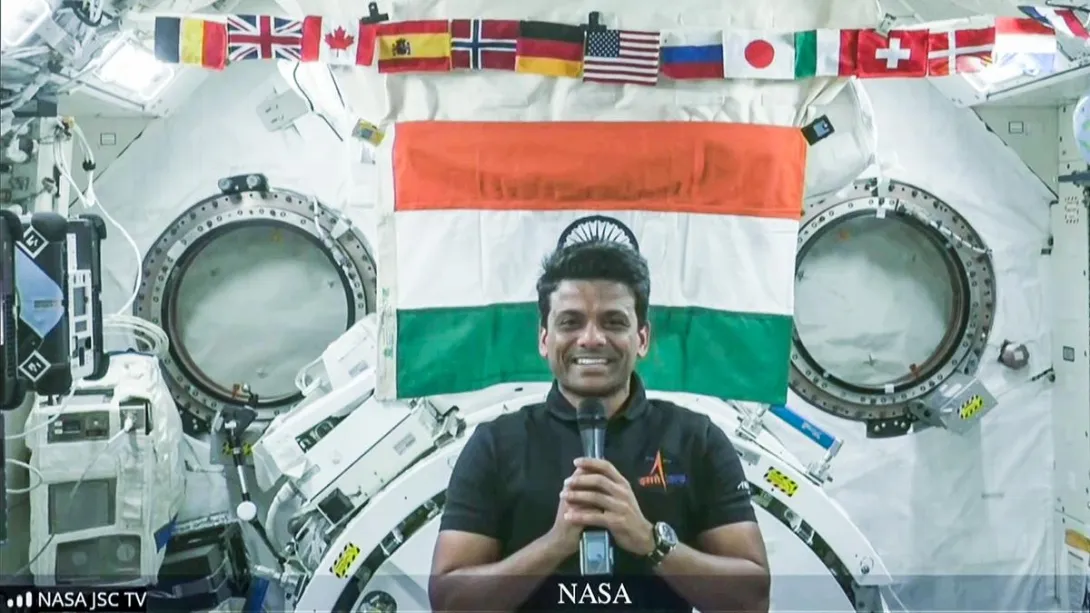
Group Captain Shubhanshu Shukla’s mission aboard the International Space Station (ISS) marks a significant milestone for India’s human spaceflight program. As part of the Axiom-4 mission, Shukla has commenced a series of critical scientific investigations, including the Myogenesis experiment aimed at understanding skeletal muscle degradation in microgravity. Over his 14-day stay, he will conduct seven Indian-led microgravity experiments alongside international studies. These efforts not only elevate India’s presence in space research but also foster a burgeoning microgravity science ecosystem. The mission exemplifies global collaboration, integrating 60 studies from 31 countries and promising advancements in both space medicine and terrestrial healthcare.
Initiation of Scientific Endeavors in Orbit
Following a seamless transition from arrival protocols to active research, Group Captain Shubhanshu Shukla—known by his mission call sign “Shux”—has engaged in experiments within the ISS’s Life Sciences Glovebox (LSG). His work on the Myogenesis experiment addresses one of the most pressing challenges faced by astronauts: muscle atrophy in microgravity.
This experiment, proposed by Bengaluru’s Institute of Stem Cell Science and Regenerative Medicine (InStem), aims to elucidate the molecular pathways that drive skeletal muscle degradation in space. The insights gleaned are expected to pioneer targeted interventions that could safeguard astronauts during prolonged missions and offer therapeutic prospects for muscle-wasting diseases on Earth.
India’s Growing Role in Microgravity Research
Shukla’s mission carries seven Indian principal investigator-led microgravity experiments, meticulously selected by the Indian Space Research Organisation (ISRO). These projects span multiple national research and academic institutions, reflecting India’s strategic intent to nurture a robust microgravity research ecosystem.
ISRO emphasizes that the practical experience from these experiments will catalyze the integration of advanced microgravity research into the Indian space program, enhancing capabilities across diverse scientific disciplines.
In parallel, ISRO and NASA are collaboratively advancing five joint scientific investigations and facilitating two in-orbit STEM demonstrations, underscoring the importance of international partnership in space science.
Expanding Scientific Horizons: Global Collaboration on ISS
The Axiom-4 mission transcends national boundaries, incorporating approximately 60 scientific investigations from 31 countries, including the United States, India, Poland, Hungary, Saudi Arabia, Brazil, Nigeria, and the UAE.
Among these diverse studies, the Cerebral Hemodynamics experiment stands out. Using ultrasound technology, this investigation explores cerebral blood flow under microgravity, seeking to deepen understanding of cardiovascular adaptations in space. The outcomes hold promise for improving diagnosis and treatment of stroke, hypertension, and related conditions on Earth.
Implications for Space Science and Earthly Medicine
The breadth and depth of research aboard the ISS during this mission signify a paradigm shift in how microgravity experiments can inform both space exploration and terrestrial medical science.
Muscle degeneration and cerebral blood flow challenges represent critical health concerns during long-duration spaceflight. By systematically investigating these phenomena, the mission not only enhances astronaut safety but also offers translational benefits for patients suffering from similar conditions on Earth.
Furthermore, the mission strengthens India’s foothold in the global space research community, positioning the country as an emerging leader in microgravity science and technology.
Conclusion: A Leap Forward for Indian Space Science
Group Captain Shukla’s expedition to the ISS epitomizes India’s evolving capabilities in human spaceflight and scientific inquiry. By executing advanced experiments in microgravity, India is contributing substantively to international space research while laying the groundwork for a vibrant domestic microgravity research ecosystem.
As the Axiom-4 mission progresses, the fusion of cutting-edge science, international cooperation, and India’s strategic vision promises to yield insights with profound implications for both space exploration and health science worldwide.
Comments