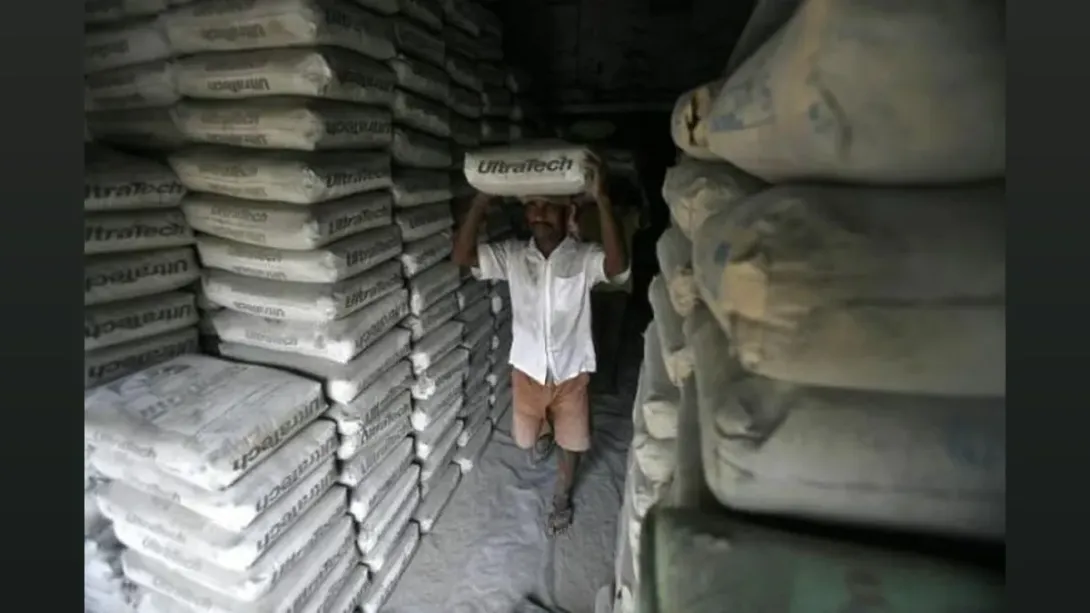
India’s competition regulator, the Competition Commission of India (CCI), has intensified its probe into potential cartel activity involving prominent cement manufacturers. UltraTech Cement, its subsidiary India Cements, Dalmia Bharat Cement, and Shree Digvijay Cement have been directed to furnish extensive financial documentation—including audited statements and income tax records—spanning up to nine fiscal years. The move follows a complaint filed by ONGC regarding collusion in government tenders, and a detailed investigation that uncovered alleged anti-competitive behavior involving a middleman. Non-compliance with the CCI’s directives may attract penalties under Section 45 of the Competition Act.
Background: Allegations Spark Regulatory Action
The CCI’s directive stems from a complaint filed by the Oil and Natural Gas Corporation (ONGC), alleging that a group of cement companies colluded in public tenders—potentially inflating bids and undermining competitive integrity. Acting on this, the CCI, on November 18, 2020, instructed its Director General (DG) to investigate the matter.
The DG submitted a detailed findings report on February 18, 2025, revealing possible violations of the Competition Act. The investigation pointed to a network involving UltraTech’s subsidiary India Cements, Dalmia Bharat Cement, Shree Digvijay Cement, and an intermediary named Umakant Agarwal, who allegedly coordinated the collusive activity.
CCI’s Directive: A Demand for Transparency
Following the investigation, the CCI issued a formal order on May 26, 2025, demanding that the involved entities submit exhaustive financial data. Specifically:
- UltraTech Cement has been instructed to submit the audited financial records of its subsidiary India Cements for five fiscal years—from FY2015 to FY2019.
- Dalmia Bharat Cement and Shree Digvijay Cement are required to provide financial statements covering a broader period—nine years from FY2011 to FY2019.
Additionally, senior executives from each of these firms must submit five years of income tax returns and other supporting financial documents, along with formal written responses to the CCI’s investigation report.
Legal Implications and Compliance Deadlines
Companies have been given eight weeks to comply with the order. The CCI explicitly warned that failure to submit the required information—or submission of incomplete or false documentation—would trigger consequences under Section 45 of the Competition Act, 2002. This section empowers the regulator to impose penalties and initiate legal proceedings in cases of non-compliance or obstruction during investigation.
This is not merely an administrative formality. Section 45 has historically been invoked in high-profile antitrust probes, signaling that the CCI views these allegations with gravity.
Strategic Context: UltraTech's Recent Acquisition
In a development closely tied to the investigation, UltraTech Cement—part of the Aditya Birla Group—became the promoter of India Cements in December 2024. This followed the acquisition of a 32.72% stake from the company’s promoter group, adding to an earlier 22.77% purchase from the open market.
This expanded stake made UltraTech a key stakeholder in India Cements, making its accountability in the CCI investigation even more significant.
Industry Outlook and Regulatory Significance
The cement industry has long faced scrutiny for cartelization risks, given the concentrated market structure and pricing sensitivity of infrastructure projects. This case highlights the CCI’s resolve to uphold transparency and fair practices in public procurement—particularly when taxpayer-funded institutions like ONGC are involved.
The regulator’s demands for a nearly decade-long financial trail underscore its intent to uncover the depth and duration of the alleged misconduct. This level of retrospective investigation is rare and marks a shift toward more aggressive antitrust enforcement in India.
Conclusion: A Litmus Test for Corporate Governance
The CCI’s action signals a clear message: regulatory bodies are prepared to hold even the most influential corporations accountable. As these companies prepare their submissions, the broader industry watches closely. The final outcome may set precedents for how future cartel allegations—especially those involving state-owned enterprises—are addressed in India’s evolving competition law framework.
Whether this investigation leads to financial penalties, behavioral remedies, or broader reforms in tender processes, one thing is clear: corporate opacity has little room in today’s compliance-first environment.
Comments