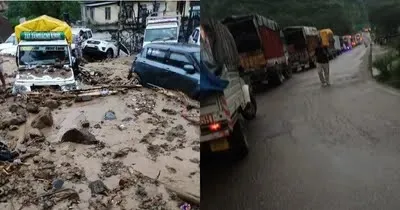
Severe monsoon-triggered flash floods have struck Himachal Pradesh, leaving at least three people dead in the Mandi district and causing widespread disruption across the region. Torrential rains have battered the hilly state, triggering landslides, blocking highways, and stranding hundreds of residents and tourists. Dharamsala, a prominent tourist destination, has been particularly affected, with major roadways rendered impassable due to debris and waterlogging. The relentless rainfall has also complicated rescue and relief efforts, as local authorities brace for more weather-related challenges. The disaster has once again underscored the state’s vulnerability to climate-induced natural calamities during the monsoon season.
Rising Toll and Local Impact
The latest spell of heavy rainfall has proved deadly in Mandi, where flash floods swept through low-lying areas, claiming three lives. The victims were reportedly caught off-guard as sudden water surges inundated residential and commercial zones. Rescue teams were immediately deployed, but the velocity of the floods left little room for intervention. Several other individuals remain missing, while dozens of families have been relocated to temporary shelters.
Authorities are assessing damage to homes, roads, and farmlands in the district, with early estimates indicating substantial economic and infrastructural losses. Emergency protocols have been activated in multiple towns to prevent further casualties.
Dharamsala Cut Off Amid Highway Disruption
In Dharamsala, landslides and flash flooding have disrupted transportation and communication networks, leaving hundreds stranded. The national highway connecting the city to other major hubs is currently blocked due to debris and collapsed retaining walls. Tourists have been advised to postpone travel, while local officials coordinate road-clearing operations with support from disaster response forces.
Public transport services have been suspended, and residents are relying on temporary relief centres for food, medical supplies, and shelter. Power outages and intermittent mobile connectivity have further complicated the situation in affected neighborhoods.
State Response and Relief Operations
The Himachal Pradesh government has mobilized disaster management authorities and emergency response teams to contain the damage and offer support to stranded citizens. National Disaster Response Force (NDRF) and State Disaster Response Force (SDRF) units have been deployed across vulnerable districts, with particular focus on high-risk zones along riverbanks and steep inclines.
Helpline numbers have been issued, and temporary evacuation centres have been established in schools and community buildings. Helicopter surveillance is underway in certain inaccessible regions, providing critical data for ground teams and facilitating air-dropping of essentials.
Climate Change and Recurring Monsoon Catastrophes
This latest calamity brings renewed attention to the environmental fragility of Himachal Pradesh, where changing climate patterns have intensified the frequency and severity of monsoon-related disasters. Experts have long warned that unchecked construction, deforestation, and poor drainage infrastructure in ecologically sensitive zones have exacerbated the impact of torrential rains.
Repeated episodes of landslides, cloudbursts, and flash floods suggest that the region’s existing mitigation mechanisms may be insufficient in the face of accelerating climatic volatility. Environmentalists are calling for a comprehensive policy shift that emphasizes sustainable development, early warning systems, and stricter land-use regulations.
Conclusion
The tragic loss of life and large-scale disruption caused by the flash floods in Himachal Pradesh serves as a grim reminder of the state’s ongoing battle with nature’s fury. As authorities scramble to restore normalcy and protect vulnerable populations, the broader conversation around environmental resilience and sustainable infrastructure has gained renewed urgency. With the monsoon far from over, preparedness will remain key to minimizing further damage — both to human life and to the fragile Himalayan ecosystem.
Comments