A political storm is brewing over the Election Commission of India's (ECI) latest electoral roll revision directives, which West Bengal Chief Minister Mamata Banerjee claims are a covert attempt to implement the National Register of Citizens (NRC). Backed by Samajwadi Party leader Akhilesh Yadav, Banerjee has accused the ECI of acting in the Bharatiya Janata Party’s (BJP) interest by targeting young voters in opposition-ruled states—particularly Bengal. At the center of the controversy is a demand for parental birth certificates from voters born between July 1987 and December 2004, raising alarms over disenfranchisement, voter suppression, and constitutional overreach.
A Controversial Directive: The ECI’s Voter Roll Revision
The Election Commission of India has announced a special intensive revision of electoral rolls, a routine administrative exercise that has taken a politically explosive turn. According to West Bengal CM Mamata Banerjee, the Commission’s recent communication requires voters born between July 1, 1987, and December 2, 2004, to submit birth certificates of both parents as a condition for voter eligibility.
Banerjee alleges that this move is not only arbitrary but strategically designed to exclude large swathes of legitimate voters—primarily in West Bengal—from participating in future elections. The directive, which has reportedly also been sent to the Bihar government, has sparked fears that the ECI is functioning as a political tool of the BJP, effectively pushing forward a citizenship verification mechanism akin to the NRC under the guise of electoral integrity.
Mamata Banerjee: From Electoral Reform to Democratic Crisis
At a hastily convened press conference in Digha, Banerjee characterized the ECI’s actions as part of a "dangerous game" threatening India’s democratic fabric. Her core argument revolves around the practical implications of Annexure D—an ECI form that allegedly mandates parentage-based proof of citizenship.
She warned that many voters—especially those from economically disadvantaged backgrounds, migrant labor households, or rural communities—may find it impossible to produce such documentation, despite being bonafide Indian citizens. “They are targeting Bengal’s migrant workers, students, villagers, and the uneducated poor,” she said, asserting that the effort is a veiled NRC rollout more severe than its Assam predecessor.
While acknowledging that she had not read the full contents of the ECI letters, Banerjee insisted that the timing, target group, and bureaucratic demand suggest an orchestrated move to influence electoral outcomes by eliminating potential opposition voters.
Akhilesh Yadav Joins the Fray: A Warning to the Opposition
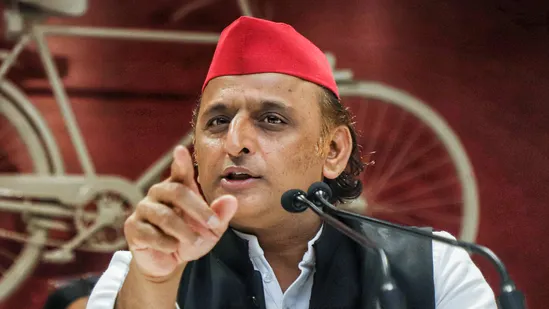
Samajwadi Party chief and former Uttar Pradesh CM Akhilesh Yadav publicly lent support to Banerjee’s concerns, emphasizing that any caution sounded by the West Bengal leader should be taken seriously by the opposition. “The BJP has a history of backdoor maneuvers. If Mamata Banerjee raises an alarm, it means there’s reason to be alert,” he stated during a press briefing in Lucknow.
Yadav's remarks underscore a growing pattern of opposition solidarity in the face of what is increasingly perceived as institutional overreach by central bodies. His statements also signal that regional parties, many of whom rely heavily on grassroots support from rural and underprivileged communities, see the ECI’s actions as potentially destabilizing and politically motivated.
The Political Fallout and Implications for Democracy
The controversy highlights the increasingly tense relationship between the federal government and opposition-led states, particularly in matters of electoral governance and voter rights. At the core of the dispute is a broader fear: that the ECI—once viewed as an impartial guardian of Indian democracy—is losing credibility by aligning too closely with ruling party interests.
Critics argue that linking voter eligibility to parental documentation disproportionately affects citizens with informal documentation histories—a common feature among India’s rural and economically vulnerable populations. If the process is mishandled or selectively enforced, it could create a large pool of disenfranchised voters and raise legal and constitutional questions about equal access to the ballot box.
Moreover, the opposition sees the ECI’s focus on Bengal—while similar procedures in Bihar remain subdued—as proof of selective targeting. Banerjee herself warned that other opposition-ruled states may soon face similar scrutiny, implying a systematic effort to undermine political rivals by disrupting their electoral base.
Conclusion: Democracy at a Crossroads?
At stake in this controversy is not merely the question of electoral roll accuracy, but the broader integrity of democratic institutions in India. The ECI’s move, though bureaucratically defensible in principle, has opened it to accusations of political bias and complicity in an alleged backdoor implementation of the NRC.
For voters in West Bengal and potentially beyond, the requirement to furnish dual-parent birth certificates may prove an insurmountable barrier—turning a procedural exercise into a political weapon. As the opposition ramps up its scrutiny and public resistance, the onus now lies on the Election Commission to provide transparent justifications and ensure that electoral reforms do not devolve into voter suppression.
Comments