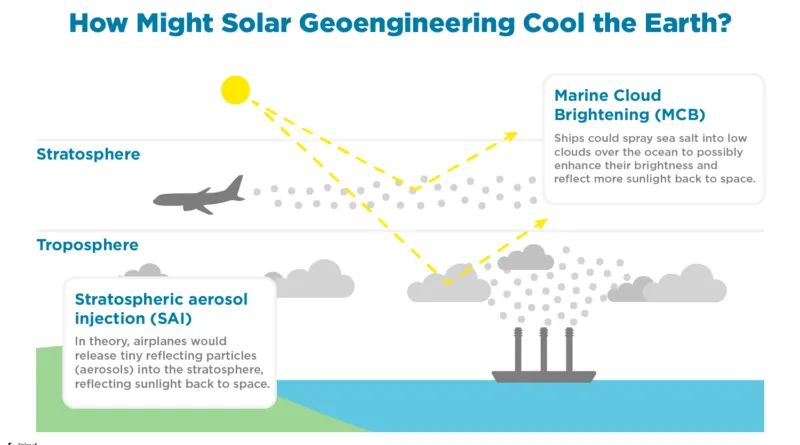
As global temperatures continue to rise, climate engineering proposals increasingly look toward the world’s oceans as potential tools for moderating climate change. From enhancing natural carbon absorption to altering marine chemistry, ocean-based interventions are gaining attention among scientists and policymakers. Proponents argue such approaches could complement emissions reductions, while critics warn of ecological risks and governance challenges. The debate underscores a growing urgency to explore unconventional responses to climate stress. At the intersection of science, economics, and environmental ethics, ocean-focused climate engineering is emerging as one of the most complex and controversial frontiers in climate policy.
Oceans at the Center of Climate Strategy
Covering more than 70 percent of the planet, oceans already act as a major carbon sink, absorbing roughly a quarter of global carbon dioxide emissions. Climate engineering concepts seek to amplify this natural function through targeted interventions, such as stimulating plankton growth or increasing seawater alkalinity.
Supporters view these ideas as potential stopgap measures to slow warming while nations transition to low-carbon economies.
Key Techniques Under Discussion
Among the most debated approaches is ocean fertilization, which involves adding nutrients to boost phytoplankton growth and enhance carbon uptake. Another concept focuses on modifying ocean chemistry to allow seawater to absorb more carbon dioxide from the atmosphere.
While early modeling suggests these methods could influence carbon cycles, real-world experiments remain limited and closely regulated due to environmental concerns.
Economic and Policy Considerations
From a financial perspective, ocean-based climate engineering could involve significant upfront investment but comparatively lower long-term operating costs. However, the absence of clear regulatory frameworks creates uncertainty for public and private stakeholders.
Analysts caution that without international coordination, unilateral interventions could lead to geopolitical tensions and uneven economic impacts, particularly for coastal and fishing-dependent communities.
Environmental Risks and Ethical Questions
Critics emphasize that oceans are complex, interconnected systems, where small interventions can trigger cascading effects. Potential risks include disruption of marine food webs, oxygen depletion, and unintended changes in biodiversity.
Ethically, the prospect of deliberately altering ocean processes raises questions about consent, accountability, and the distribution of risks and benefits across regions and generations.
The Road Ahead
Most scientists agree that climate engineering in oceans cannot replace emissions reductions but may, at best, serve as a supplementary tool. Ongoing research, transparent governance, and international oversight will be critical in determining whether these ideas move from theory to practice.
As climate pressures intensify, the ocean—long a silent buffer—may become an active arena in humanity’s response to a warming world.
Comments